Saros Technical Review PS5 vs PS5 Pro
Share the Story:
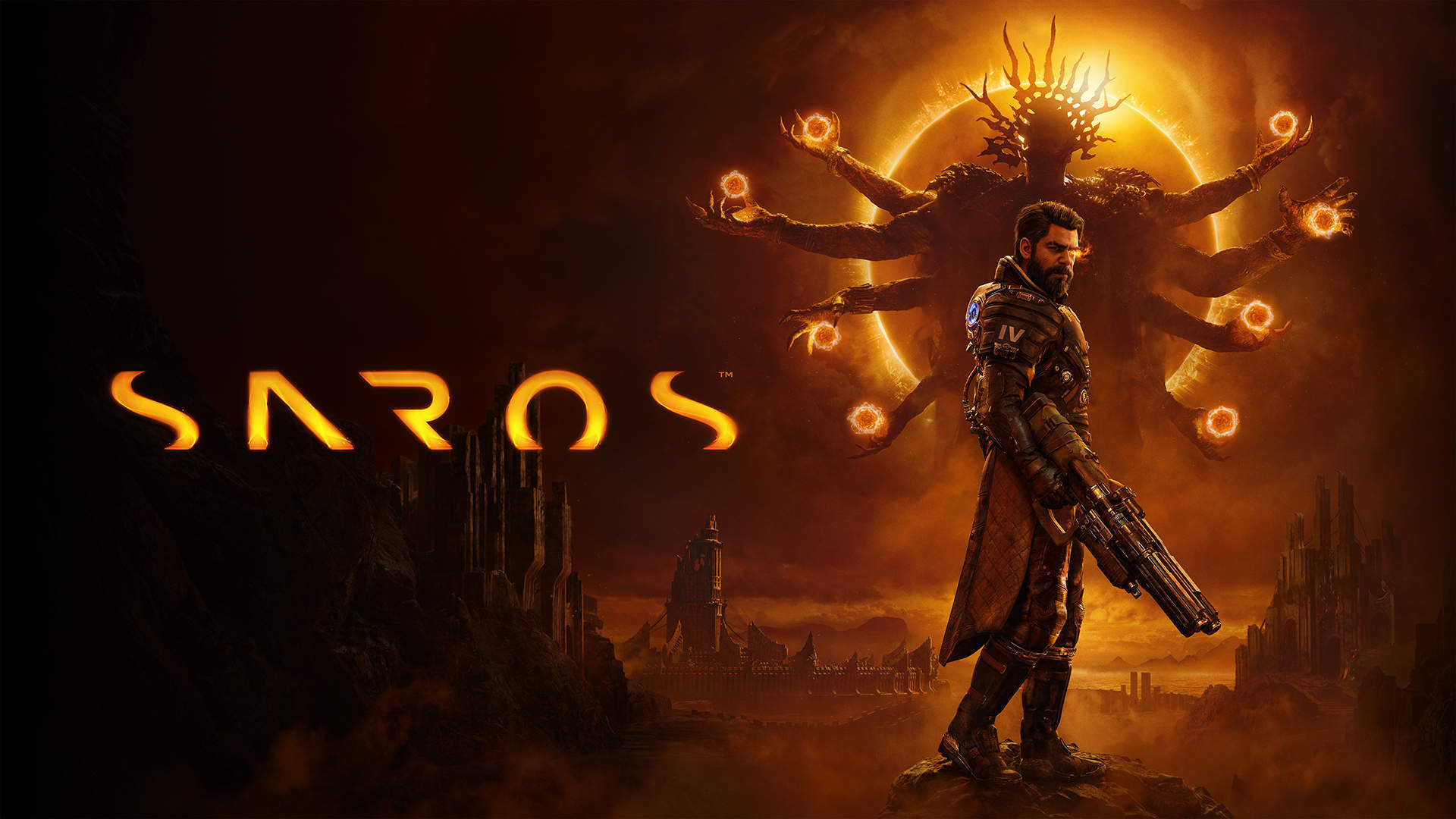
Housemarque have been a staple in gaming for many a decade, starting life back on the amazing Commodore Amiga and Stardust. They have always made arcade focused, gameplay first, titles. With a flair for awesome visuals, challenging but skill-based action, and a penchant for technical achievements, and particles. Saros is the unofficial sequel to their 2020 PS5 debut, Returnal, again built on unreal engine, Unreal Engine this time utilising the key features of the new engine in Nanite and Virtual Shadow maps and Ray Tracing. And of course they continue to push on particles, bullet ballet hell swarms, tentacle tech and a slightly more, malleable, difficulty curve.
Technical Comparisons
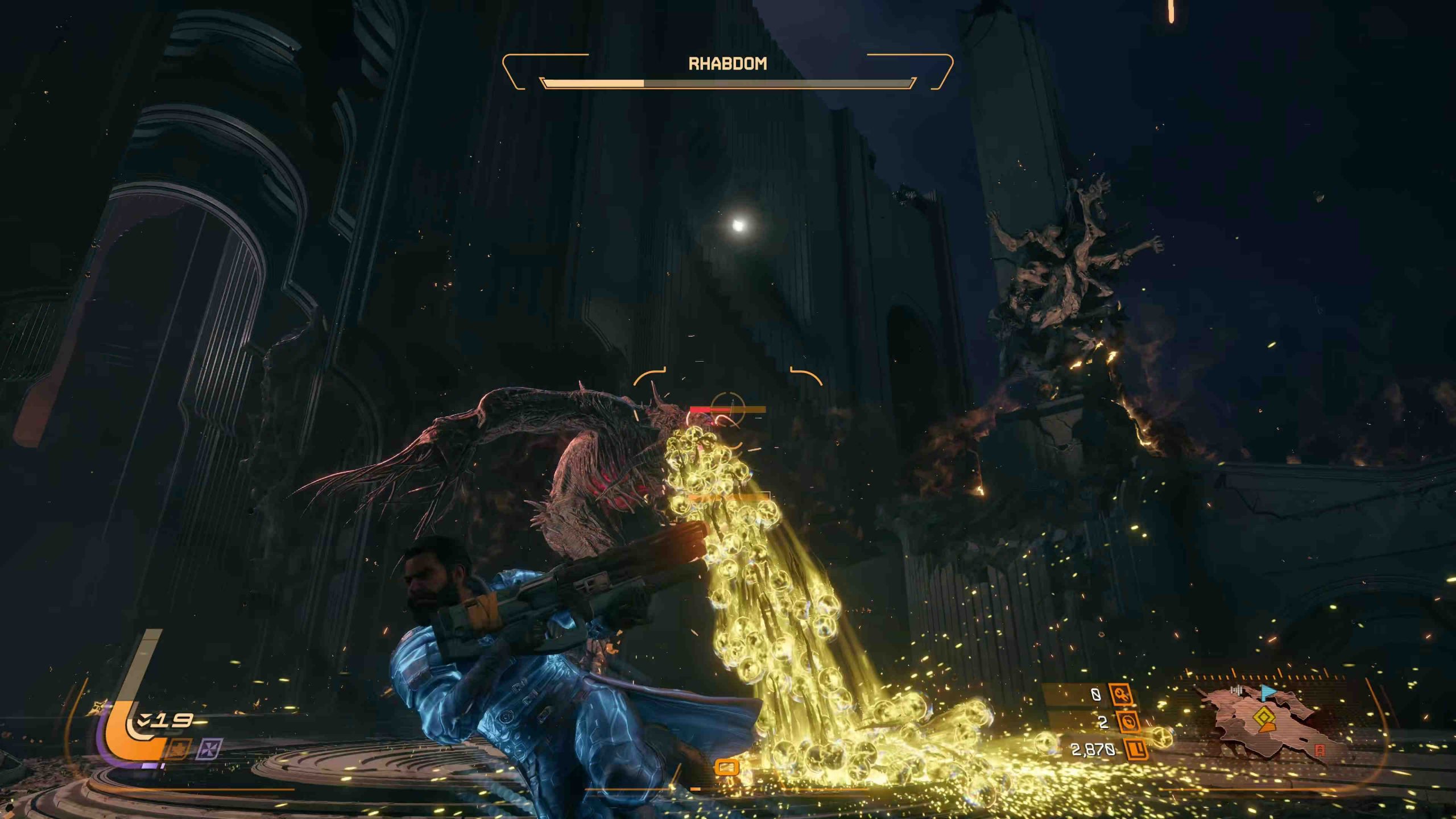
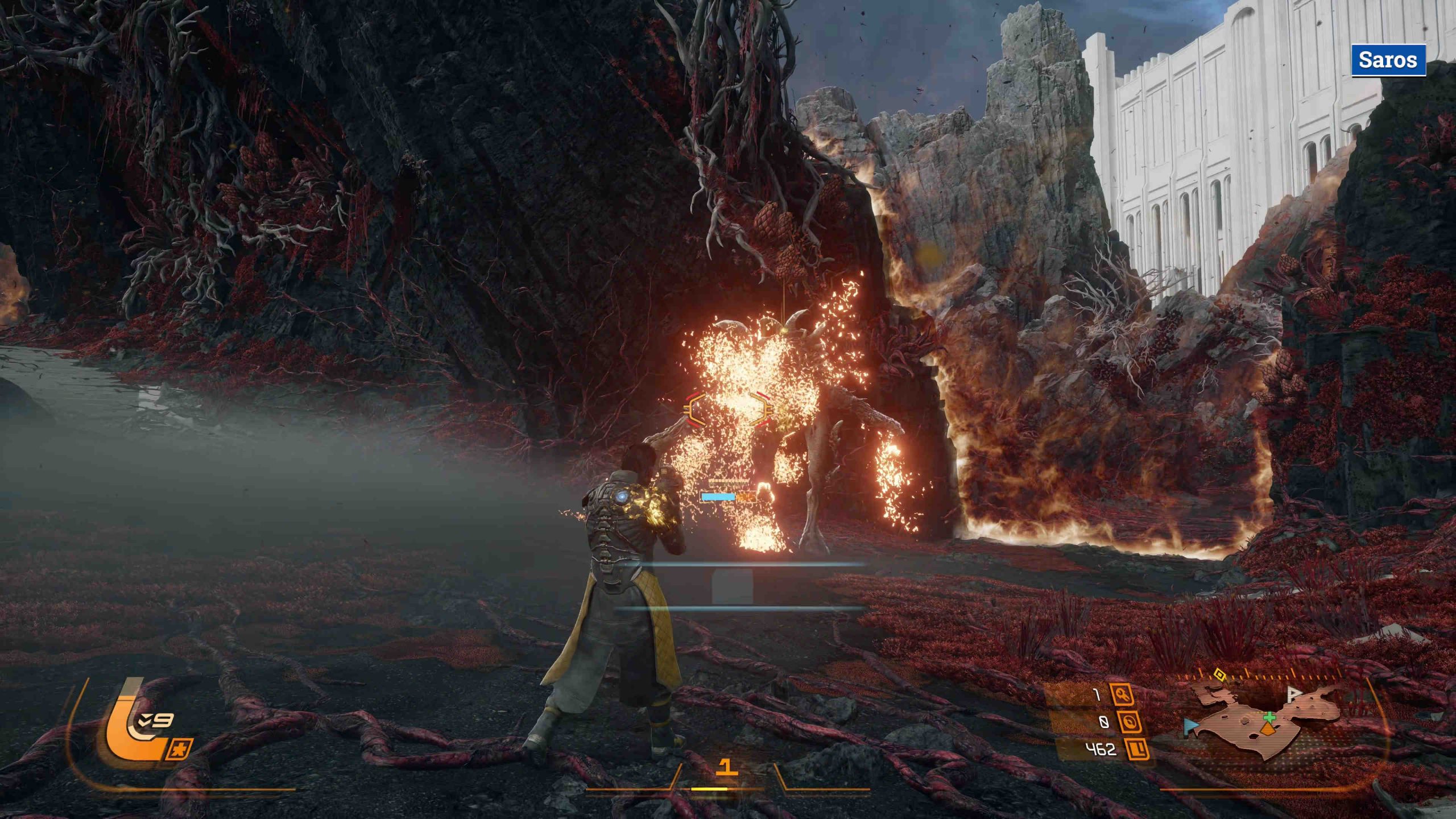
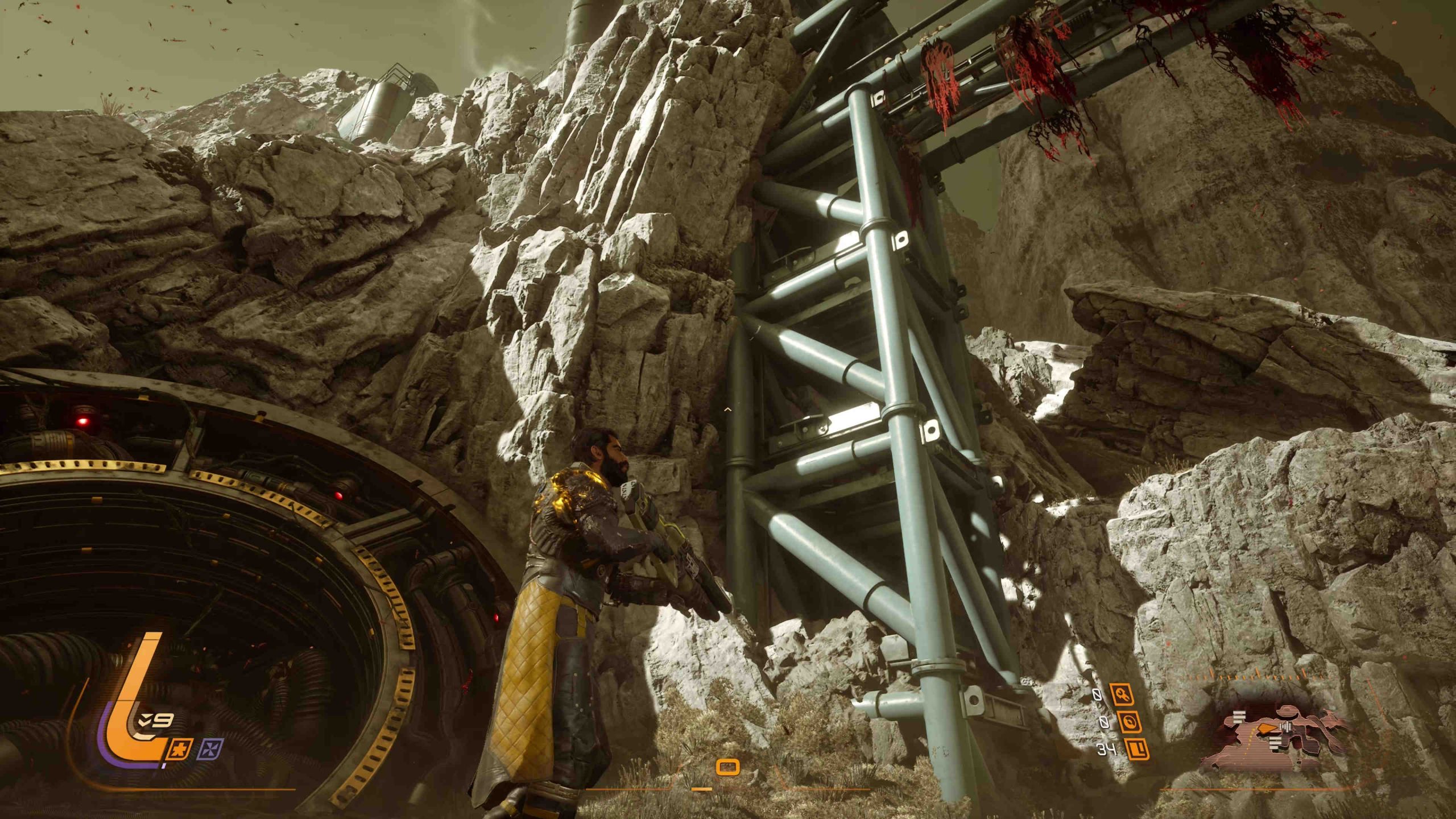
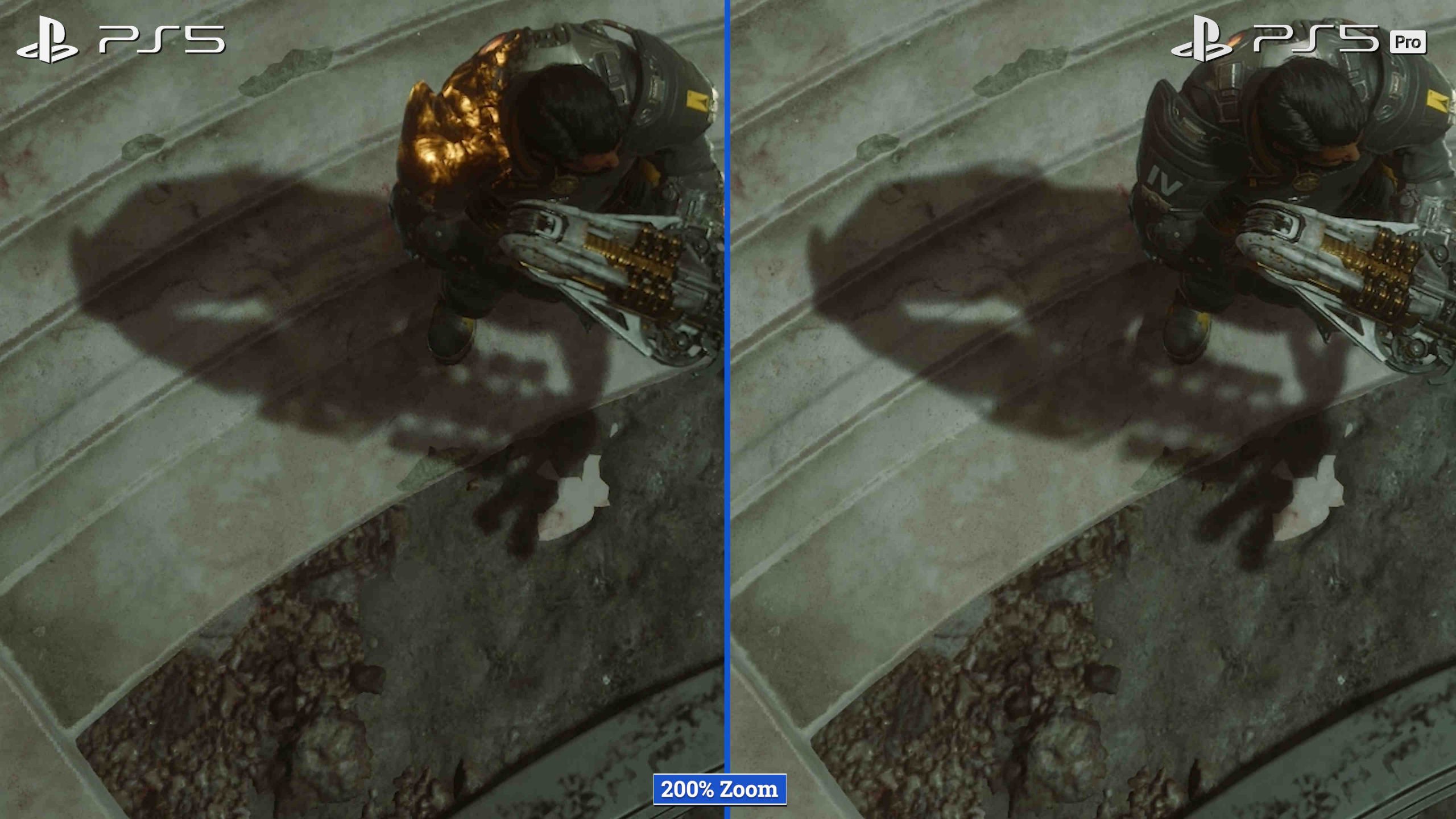
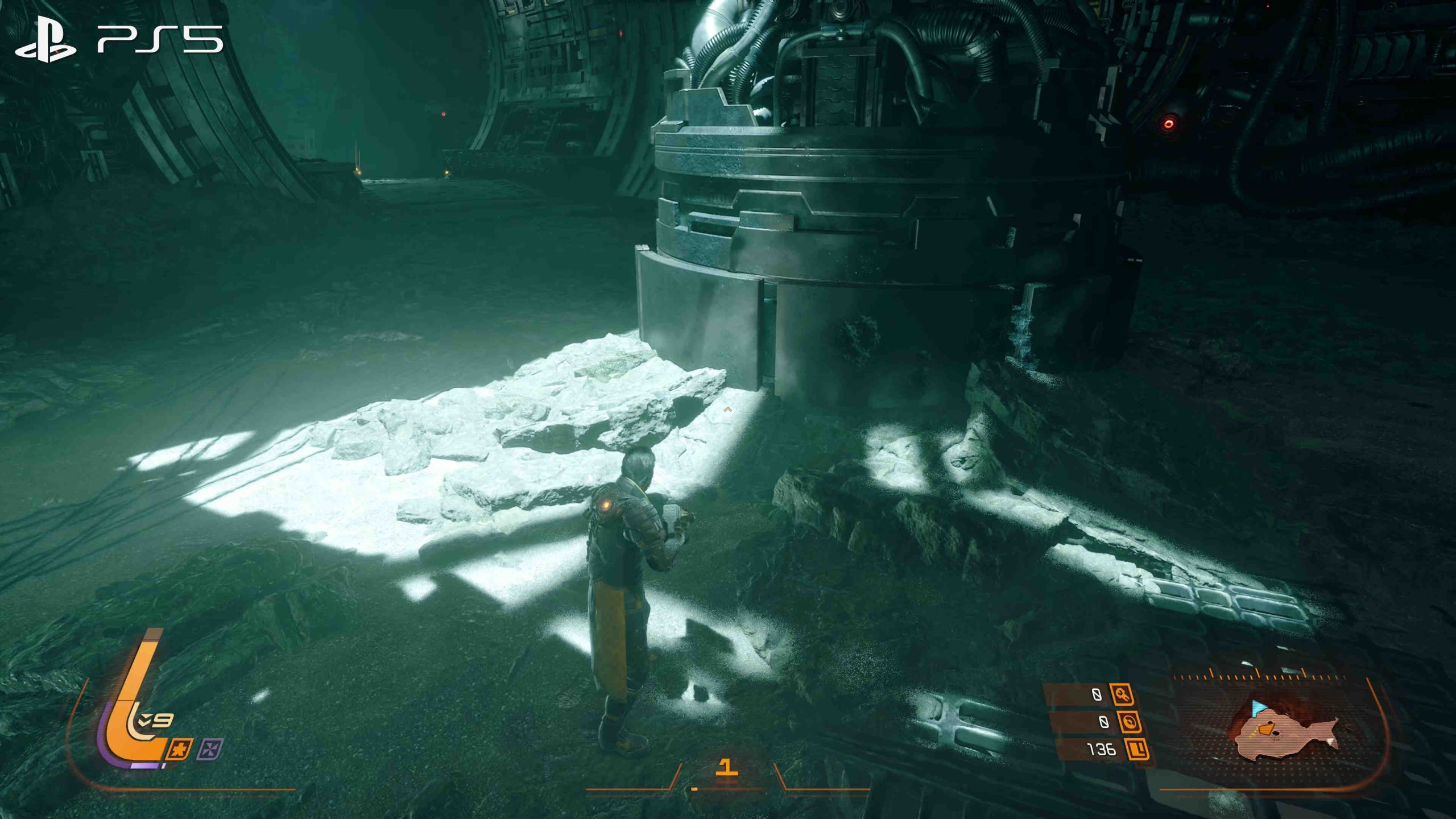
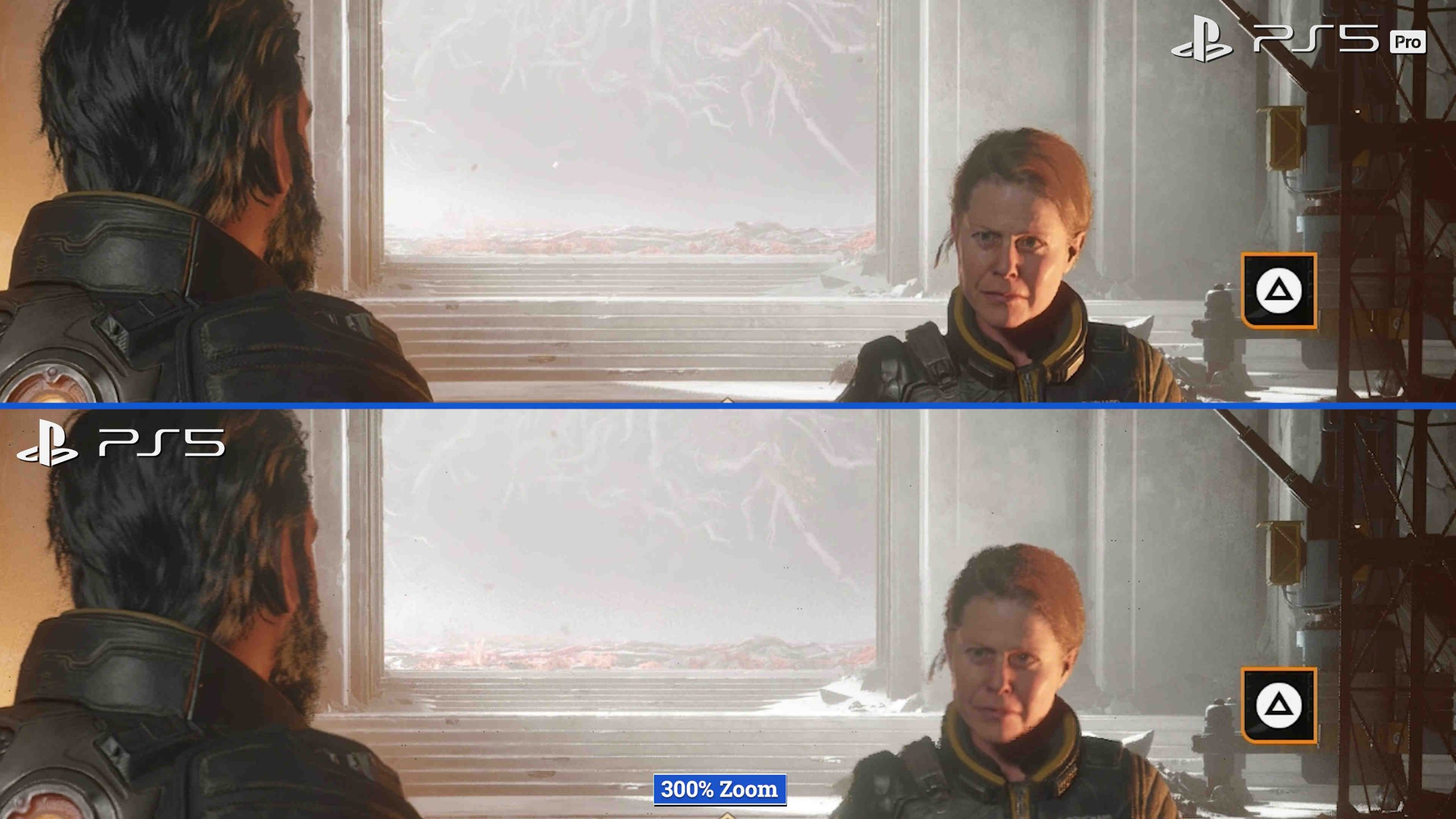
In a refreshing change, the game has only a single mode on each, old school in gameplay design and presentation.Both run a ful 3840x2160p output, and both use Dynamic Resolution scaling. PS5 varies between an approximate 2240×1260 to a 1920x1080p lowest base upscaled to 4K via a temporal AA pass with similar artefacts to FSR2 for me to be confident that is what the team have used. On PS5 Pro the gameplay also appears to hit 4K most often, likely due to its use of PSSR2 which achieves a much better resolve of fine detail, reduced ghosting and harder to spot counts below that target, but around 2560×1440 to 2880x1620p appears the lowest counts as a base. The art, subdued colour and lighting, along with relatively low frequency textures mean it can look significantly better in some areas and less so in others. We get far more ghosting on the floating elements on PS5’s FSR2 Anti Aliasing with many specular elements disappearing into the temporal blend. PSSR2 retains far more high frequency detail, drastically increasing the density of the debris and improving fine detail on hair, textures, Reflections, shadows, effects and more. Resolving finer details and far less trailing of elements in motion with a higher base resolution of all elements and far superior upscaling.
The result is a game that looks much better in action with multicoloured bullet spray coming at you, as scenery crumbles under fire, enemies explode into a firework of geometry to particle debris. Which relies on Housemarque’s own custom FX system that elevates the game away from the standard UE5 system most other games use, one they have impressed with in Resogun on PS3 and PS4 back in 2013, Ex-Machina voxel-based level destruction, and of course Returnal. Ramped up more here, albeit with less scenary based procedural destruction. But the aim remains to create a modern “Shoot-Em-Up” from the 80s and 90s with drone-based attacks, pattern mathematical bullet spawns like theThunderforce series, R-Type, Battle Squadron and even Space Harrier. And in the midst of bullet ballet action, with lights, explosions, both consoles look and play almost identically.
Building on the Chaos
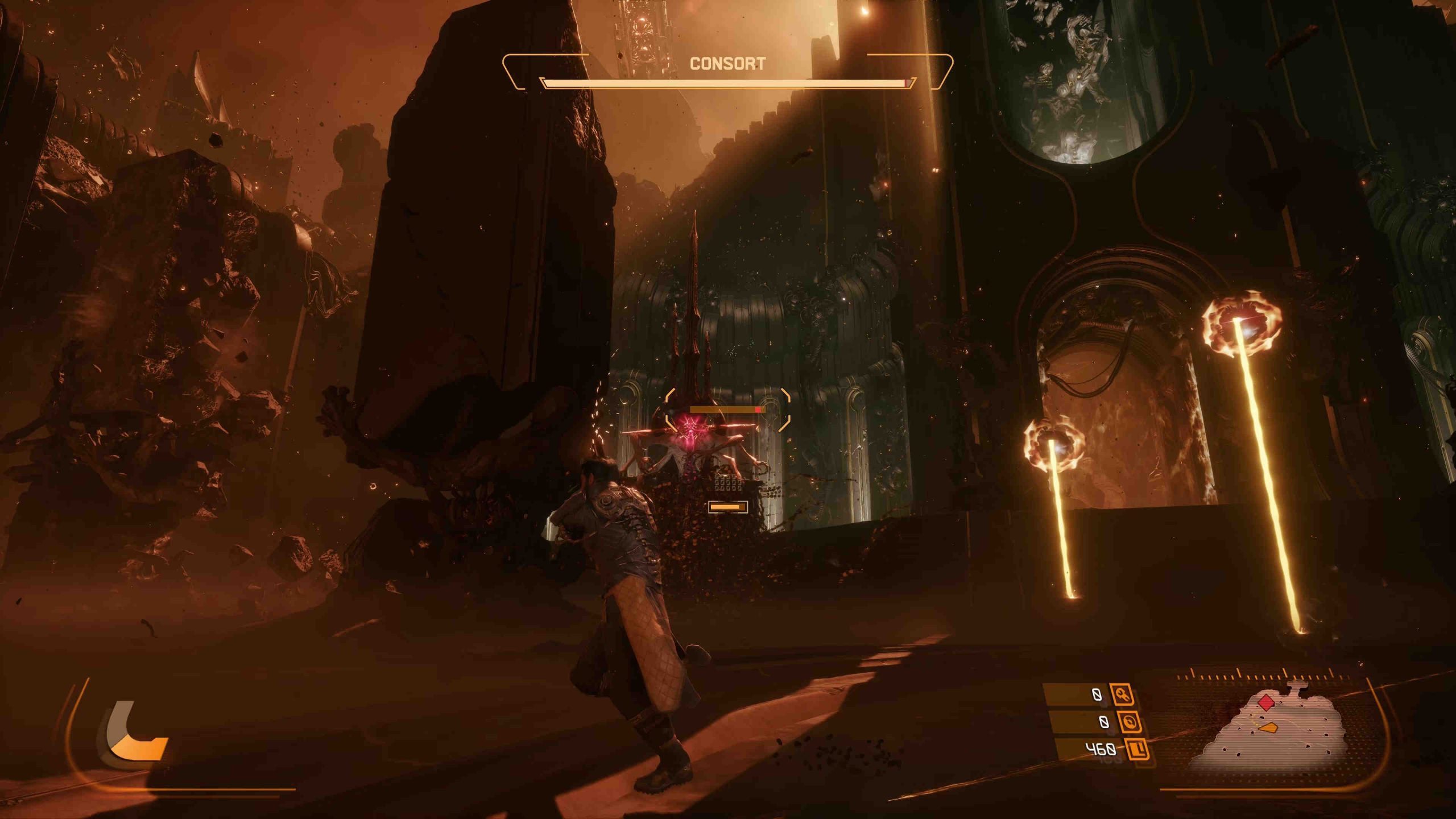
Now, this is not to say PS5 Pro does not have some other improvements over PS5. Reflections and Shadows for example are better on PS5 Pro, Screen Space Reflections (SSR) used with, what appears to be software Lumen or Ray Traced or Ray marched Dynamic Cube Maps in certain locales, which create perfect parallax aligned geometry to the camera. These are mixed with SSR which improve light reactions, indirect illumination and material quality. Cascaded Shadow Maps(CSM) and UE5 Virtual Shadow Maps(VSM) are used across the game world, with obvious issues, such as blocky, broken geometry can be left behind on the flow due to the wat VSM cache shadow page data for performance and the depth buffer data. The team have aimed to use VSMs mixed with Cascaded Shadow Maps to balance the cost across the entire game, as sun and other light sources use them. We see CSM on some objects and VSM on others and these are likely due the game using Nanite for many objects, such as statues, rocks, dense geomtery as you get no LoD draw in as you move through the world, while debris, foliage and other objects that are not Nanite based do still draw in as based on camera frustum depth. The VSM’s can also draw in and out based on camera and depth from light source another giveaway, but no cascade swap or draw in is seen on these, but CSM can still be seen drawing in with higher versions as you move toward the recieving surface. Reflections are much clearer, cleaner and more stable on PS5 Pro as are Shadow resolution and filtering over PS5, Resolution increase, effects increase and PSSR2 likely combine to aid this result. This mix of reflections aids diffuse and specular surfaces, such as water bodies which use a Water fluids simulation, based on the same particle system that drives so much of the FX. In large battles mixed with surface Reaction, Screen space reflections and enemy swarms and pyrotechnics, it is a tech heavy game that at Times reminds me of Doom the dark ages in arenas and open level mix, even art design at times feels similar.
Performance
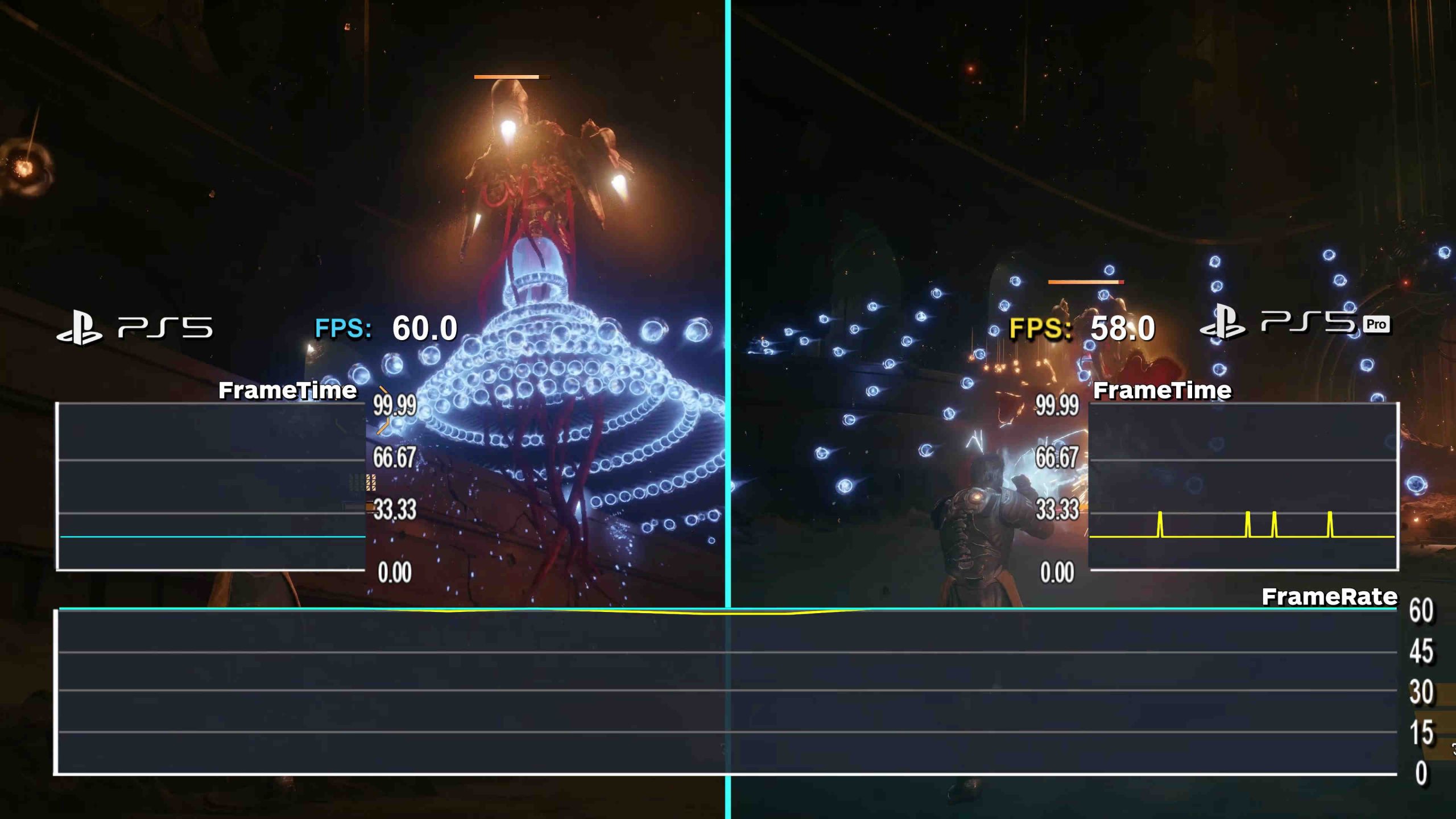
Pretty much locked 60fps on both, although some heavy particle and alpha FX can cause minor single frame drops. This happens slightly more on PS5 Pro due to increased resolution of everything, improved quality and PSSR upscaling cost. However, since review code and then post launch, the updates have made this even better with the minor dips now being close to single digits. But these are so minor as to be all but invisible. The game can also have occasional streaming data stutters, only a few dropped frames or 50ms spikes caused, I suspect, but the procedural level design that effectively generates fixed areas that are joined and generated at run time on each run. Stitched together like a scale-electric track to form the same start and end points with key, fixed points in between. I suspect this process of loading in the next track block is a cause of these blips.
Finally, a few tears in the sections that jump from 60fps gameplay – 30fps real-time cinematic – 24fps video and then back to 30fps then 60fps. These are likely data access CPU related handling the playback, loading of new world and enemies in parallel. So the game looks great and runs well, consistently, the game achieve 99.8% of its 60fps target, something equally true of Returnal on the base PS5 at launch
Gameplay
Saros is very focused on the bullet hell style created in the 90s with Batsugun, you travel through level, pick up new weapons armour, choose the one that fits your needs, dual firing options, kill drones as you go, dodge, absorb, evade particle patterned enemy fire, fight mid level tougher enemies, big end of level baddie, move to next stage. It is a modern shmup with those rogue elements reduced now being able to carry over weapons, upgrades and the expandable skills makes it feel like a crossover of R-type meets, Thunderforce cum Xenon II. It works well as the game is very offensive with some defensive tactics required. Rewarding risk with recharging your power shot, returning health or more. Very frantic, busy, and it controls well presenting excellent controls and some impressive moments in battle. The challenge is hard but fair and it sounds superb with a set of 3D headphones or better yet a 7.1 system. The DualShock again adds a great deal to the games fun, involvement and impact with the dual fire needed a gentle click of the left trigger which you can feel in hand making it a standout aspect of the game and PS5 entirely.
Final Thoughts
The game uses of dynamic lights, VSM, Nanite, excellent AO and dense detail creates some atmospheric and foreboding worlds to explore and fight in. Mixing many architecture designs from Greek/Roman, Gothic, organic and even Alien like mechanical sections presents a varied set of biomes to adventure within, I just wish each world had a bigger variety of enemy types that mirrored the surroundings more sympathetically. The procedural, random level flow works more consistently and logically in Saros also. You can prefer one over the other, but Saros does a better job of mixing the art and tech with the gameplay and is a much faster paced game to boot. Sound design and dual shock is very good, but not a huge increase on the already superb Returnal. But the Sony 1st party games always use the dual sense well which really adds a tactile and tangible USP for the PS5 and the games played on it.
The story is the biggest disappointment, not making much, if any, logical sense based on the gameplay, environments, things that occur. It feels disjointed and juxtaposed the gameplay and is almost Shoe-Horned in. I felt that a much simpler “Save the galaxy from alien invastion” would suffice as the gameply hook, combat and action is superb and the story adds nothing to that, or luckily detracts from it. The particle system, dynamic and chaotic action along with contrasting colour schemes, pattern-based projectiles and firework like combat is the games signature dna and is one of the most dynamic and impressive systems in games, surpassing anything I have seen using unreal’s niagra equivalent. It is great fun to play, upskill and amaze at the chaos on screen, feeling like a genuine old school shooter in a modern skin.