Metroid Prime 4 – Switch vs Switch 2 Performance Review
Share the Story:
Alpha, Beta, Omega
You never get a second chance at a first impression they say, and with many aspects of Metroid Prime 4 this is very true, from the characters you meet, the format you play first and even the game production itself.
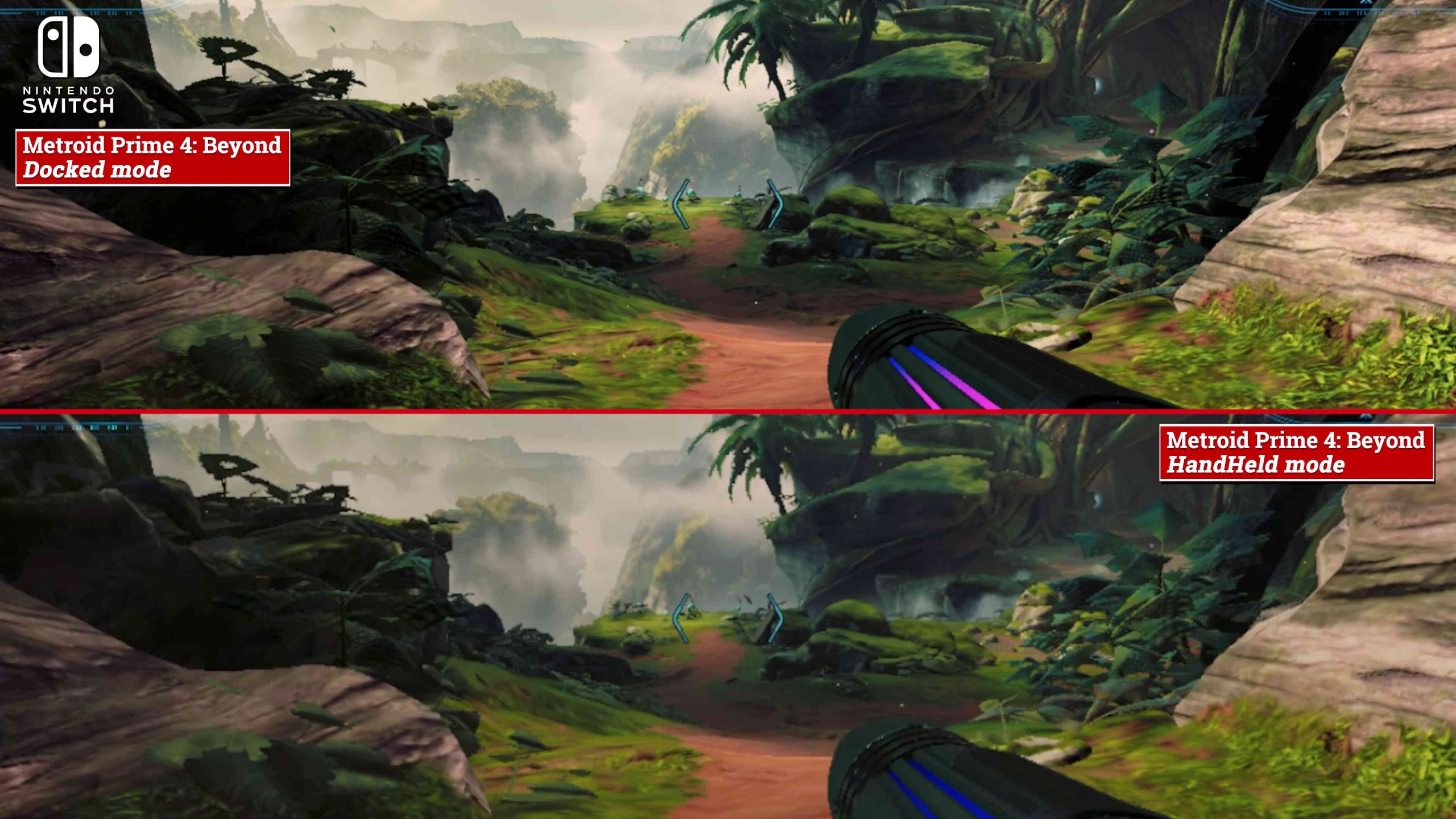
Retro Studios used the GameCube Metroid: Prime port, with Iron Galaxy, for the building blocks of this Switch cross over title. The engine delivers crisp, largely sans Anti Aliasing(AA), 1600x900p 60fps visuals in the remaster, here though it takes a 10% haircut on that across both axis for Prime 4. Now hitting a fixed 1440x810p in all my counts within a 900p output in docked mode, including the Hud and 2D visor. Handheld mode drops this down to 1280x720p output from a 960x540p, very retro indeed. The benefit is it runs at 60fps in both modes on this almost retro Hand Held itself.
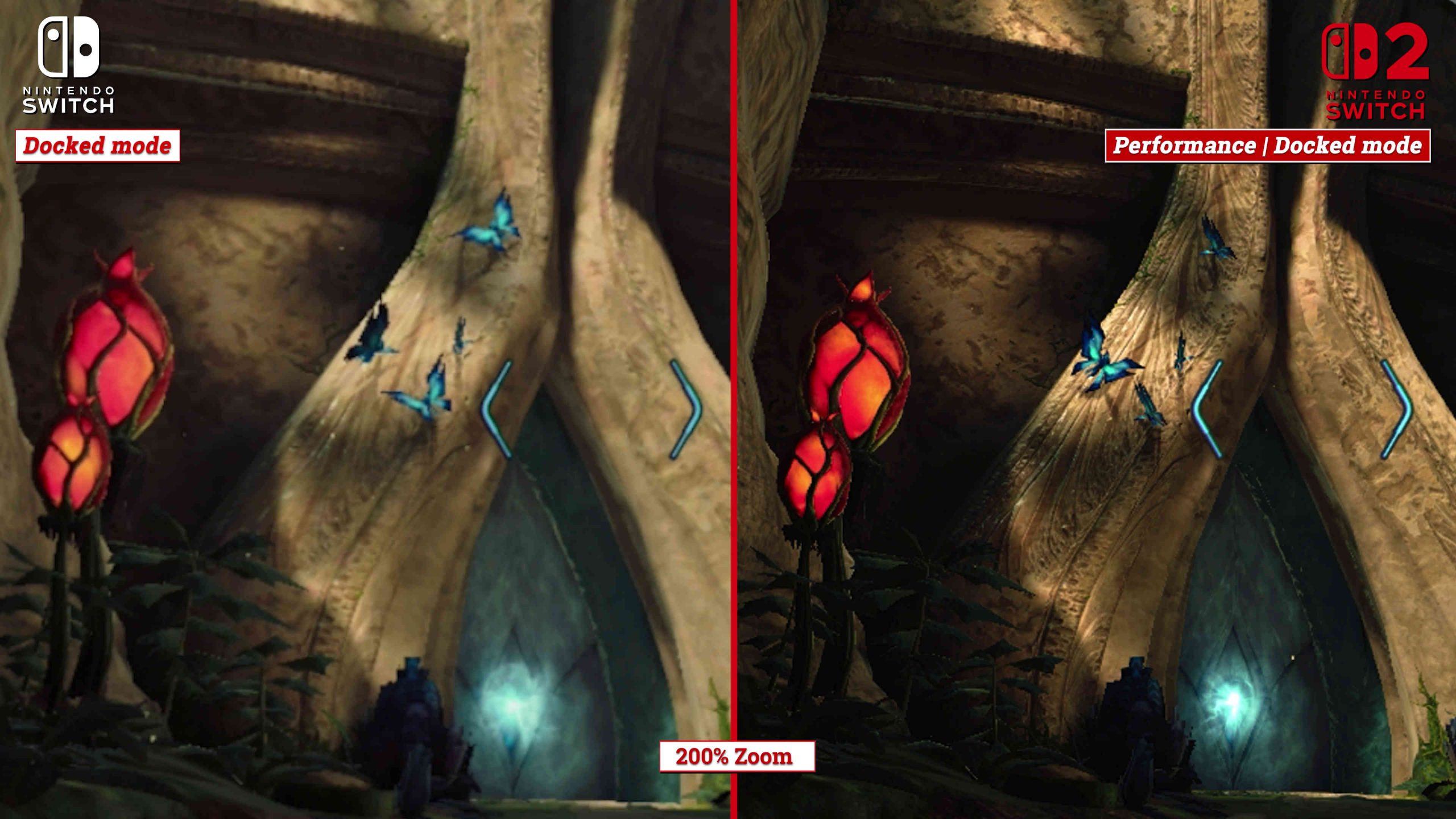
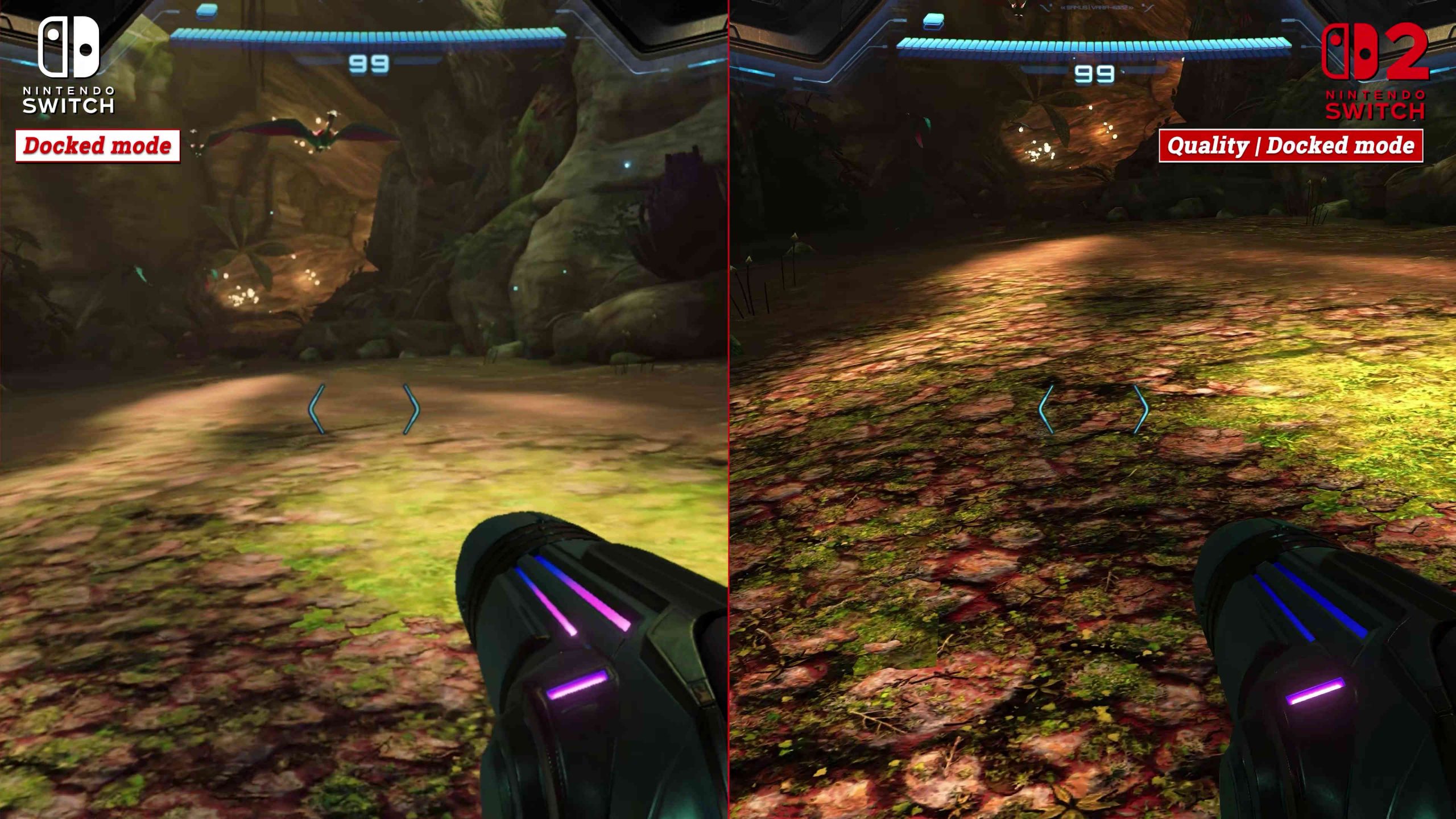
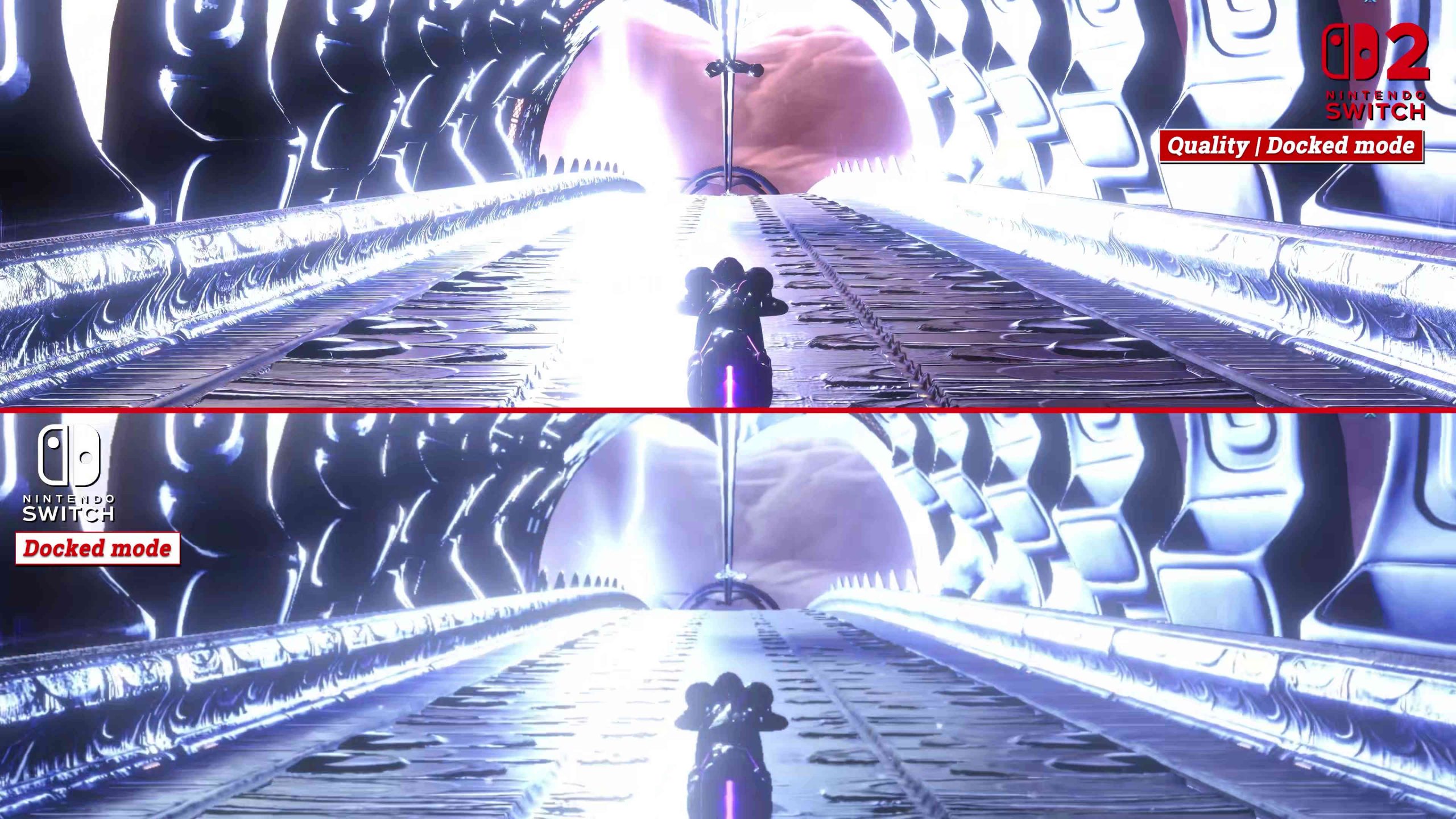
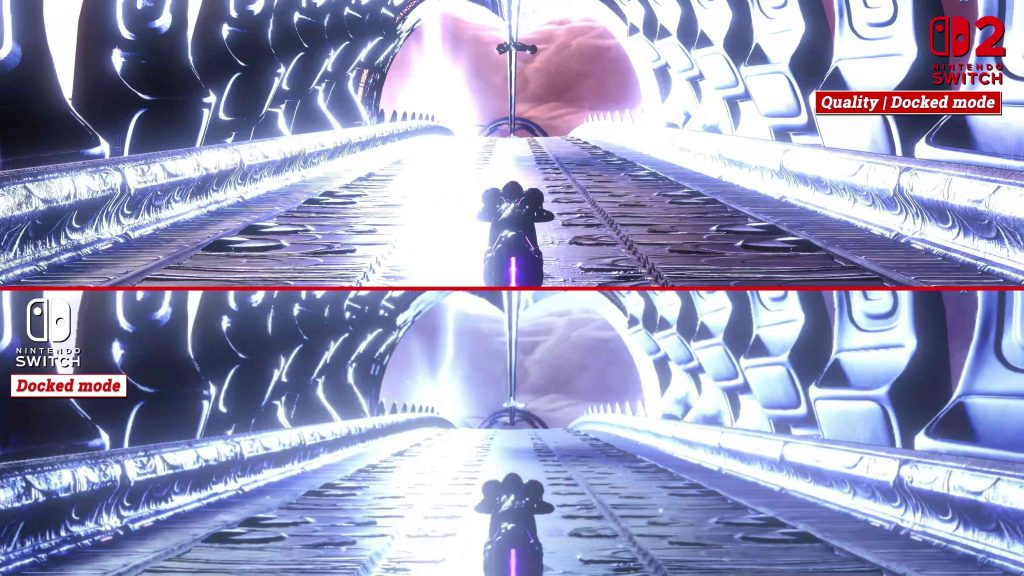
Switch 2 improves on those numbers and modes with Crisp visuals, much higher assets, details and clarity. Owing most to the 12GB of Vram vs the 5GB total on Switch, only 3.2GB is available to the game vs approx. 9GB for Switch 2. A 3x increase in Ram allocation means we get vastly higher details, normals and quality irrespective of the output resolution, which is higher.
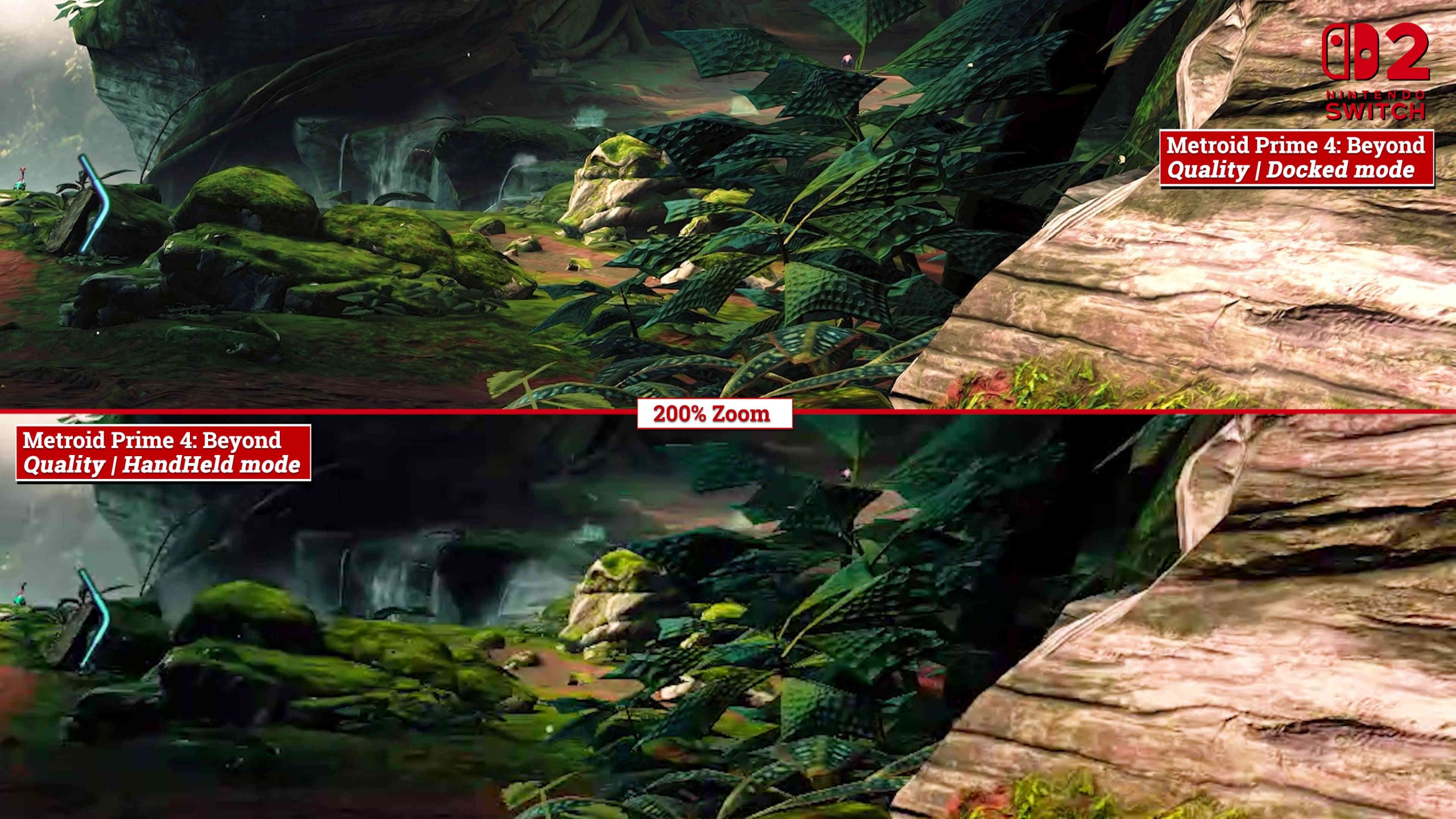
Quality mode target 60 also like switch but 4K Hud and output from an approx. 2560x1440p Base SMAA as the TAA of choice, created by Jorge Jimenez amongst others, an excellent, relatively cheap, Subpixel Morphological AA that cleans up shimmer and sub pixel jitter well without smearing or blurring the image with ghosting and halos which TAA can often cause. Meaning we get a far superior image resolve in docked 4K or 1080p in Handheld mode at the same 60fps and settings whether docked or on the move.
Performance mode takes the same path to boost frame times, slicing around 44% off the pixel throughout for a doubling of performance to 120fps. Whilst docked this means we get a flat 1080p output now but much faster and smoother response, with the Handheld mode slashing this further with a flat 720p output now, matching the OG Switch with a 55% reduction on fill rate, to hit that 8ms frame time. And this is one of just 2 games since I bought my Switch 2 at launch that has a true 120Hz mode to test, which does highlight some issues with the LCD Panel itself, that I will get to a little later in this video’s performance section.
Spot the Difference
So, comparing both generations of Switch, and the dual modes on Switch 2 we can see that going from Docked to Hand Held mode has a similar level of impact, within 12% of each other at 60fps but the 120Hz mode on Switch 2 costs the same in Pixel pushing and bandwidth as the 2016 model, some 55% less. However, due to the much smaller screen the change is almost imperceptible. Settings do not change between modes and even between Switch 1 and 2, the install size is around 2.1GB for the Switch 2 version which is likely all textures in the game, which are authored at a much higher quality and resolution which, along with them occupying more Vram, means we see almost all the visual changes coming from this main area. Resolution increase does help, mostly in texture filtering increases with Quality being slightly better that Performance and both drastically better than the Trilinear of Switch 1. But the games art and visual make-up mean this is less impactful than asset quality. Shadows are the same, LoD levels, character models, animation and even enemy counts and attack patterns. Realtime cutscenes and gameplay all line up and look like a remaster of yesterday year, or more apt, changing settings from Low to medium. Outside of this though the increased fluidity and 120hz mode are the other big wins for Switch 2, well aside loading.
This is where the much faster I/O of the Switch 2, CPU and Ram along with some dedicated hardware to depack data from the cart or drive means we see huge gains in loading, Main menu to the same load of the first real mission, Switch 2 does it in just under 30 seconds, which is not lighting fast but much faster than the old Switch. Which takes over a Minute to the exact same load, over 2x faster loading increase over the old Handheld. Which adds up in the game the more you play, however the loading within each segmented level is almost zero, even on Switch, and they have greatly improved the data streaming and access now in their engine over the remaster. Lifts, opening doors and changing into the morph ball and back are all much faster, as is performance, at least on Switch 2. However, the game is not free from loading, and they are often hidden by Metroid version of the Subway ride in Spiderman. Jump in a cargo shuttle, treated to a flying escape pod as it loads. Enter a new level from the open world, loading on a cargo ship, leaving a level back, the same. Even getting your bike and leaving the Fusion level is a moody bike ride admiring Samus’s Alpine Star boots, Arai helmet and Dianese leather gear. These are much longer on Switch 1, upwards of 40 seconds to over a minute, but Switch 2 can see these take upwards of 20-25 seconds on average.
Keep Rolling, rolling, rolling
The 120Hz mode on Switch 2 is a great option, with it being the best way to use the mouse option support with the Switch controller, but I still preferred the controller, As far as overall game performance goes unsurprisingly it hands in a stable and smooth 60fps on Switch 1, with open sand map level, combat sections, and even the most stressful Volt Forge level sticking close to the 16ms frame time. It can have a dropped frame or two in some odd spots but I feel most are data/memory related than pure GPU or CPU impacts, and this is even better on Switch 2’s quality mode which is by and large locked to that rate in all section with no issues, true on both docked and hand held mode on the OG and newer Switch console.
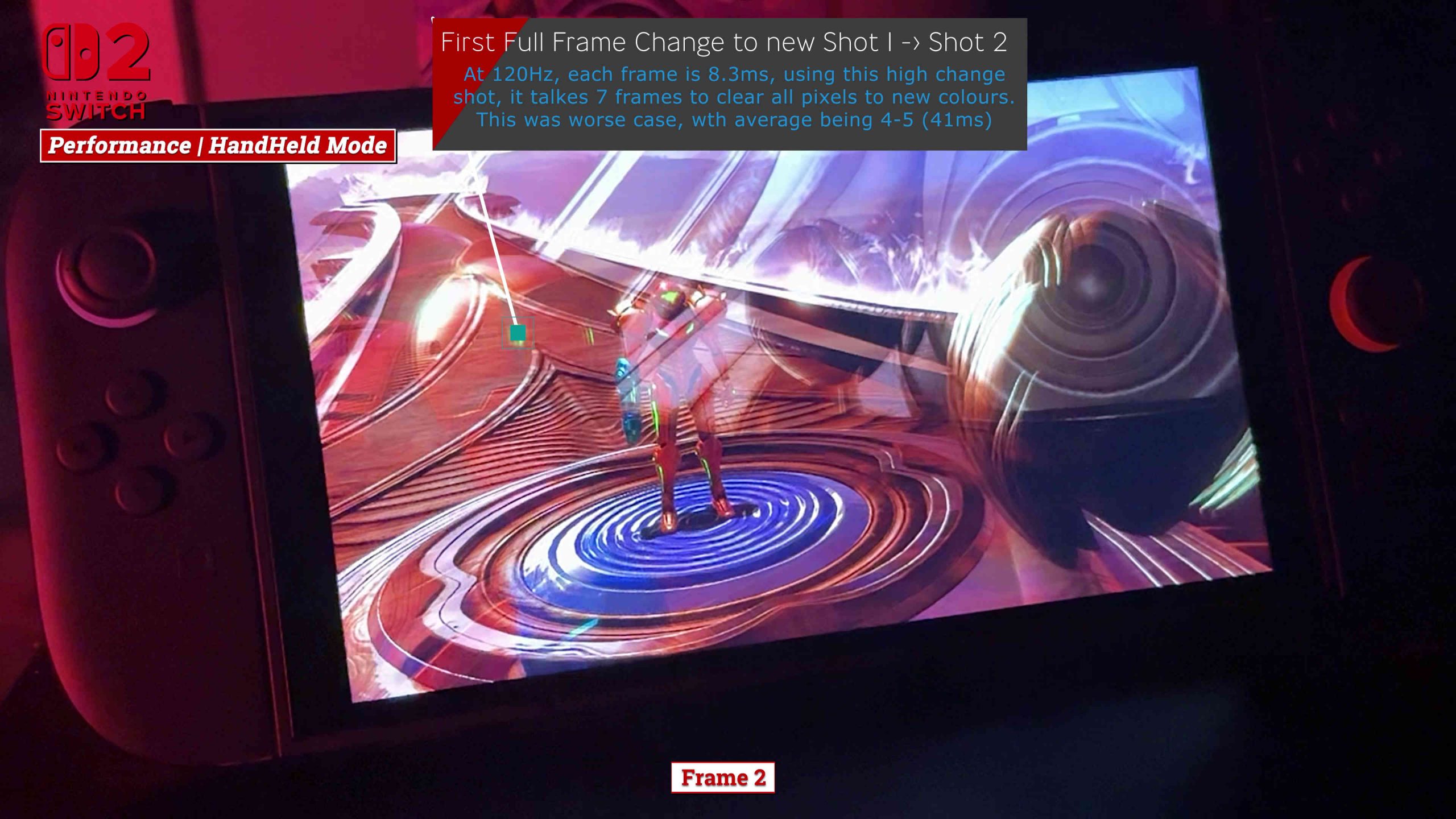
And the same is true of the 120Hz performance mode where try as I might I could only find a single frame drop in combat, motorbiking and puzzle solving even the real time cutscenes present no issues, and this is again true, based on limited tests in the handheld mode. However, this brings us to the LCD elephant in the room and response times of the Switch LCD screen, in my tests using Metroid’s 120Hz mode I found that response times (the time it takes for the pixels on screen to fully transition from on or off, Red to Blue etc) is on average around 41ms which is not good for a screen designed for HDR and 120Hz outputs. As you can see here in my 120 and 240fps capture we can see excessive ghosting of the image which causing blurring in motion but also frame persistent on high contract changes as a sudden shift can take 4-6 frames at 120Hz to full transition. And in action and constant motion, the result is an image that can look blurry and nosier than the same output does on a docked 4K 120Hz screen, such as my OLED LG or Samsung 4K panels. Compounding this is the panel also lacks the brightness and pixel isolation to present anything close to the HDR the game can deliver whilst docked (specifically since Nintendo update the OS HDR config tool to be, well correct now) and this is only compounded by the ghosting persistence issues just noted. That said, the 120Hz mode is noticeably better in HH mode that the 60Hz one and the drop to 720 makes little difference and thus is my preferred way to play on the move and whilst docked. The significant pixel increase in Quality mode is not as impactful as the increased refresh and input latency, with the OG Switch matching the Switch 2 identically for a 100.17ms input median latency in the single and Quality 60hz mode respectively. Whereas the 120hz increases this by over 41% to 58.5ms Median, which feels significantly better. And this carries over to docked mode also, but your screen of choice will have an impact on that.
Final Verdict
Metroid prime 4 has been a long time coming, and it has clearly been a reboot of epic proportions in that time to take nigh on 8 years to launch. The visual results and performance on both Switch and Switch 2 are very, very impressive and continue the Nintendo trend of quality control and smooth, 60fps or die gameplay. Visually it is also a god looking game with clear artistic influences from many areas, such as the H R Giger Volt Forge and Ice Levels being a mix of Alien meets journey to the Centre of the Earth. With a Maximillian style century droid from The Blackhole, Audry II boss battles and a cool but under used Akira Cyber Cycle mechanic for Samus. The gameplay is very safe and feels similar too previous Prime games, explore new world, unlock doors with powers, find the McGuffin, fight some baddies, power up, rinse and repeat. And on that score, it is pedestrian and never offers much surprise, although some levels and sections are better than others. The open Sandbox that connects each level past the 2nd is largely pointless and baron. With little within to occupy your interest but does add time to the game, which I feel is the only reason it is here. With reviews focusing on how many hours to complete skewing developers to make these decisions when they simply do not work, and it is not an open world. Just a Mad Max style desert to extend level x to level y in those all-important engagement minutes. Sound is good, but the music can grate and I never noticed any great tunes or rousing score during any sections. The games art though is the best part with great use of specular lighting, diffuse materials, shadows, and colour along with light, bloom and all pre-baked to look exceptional on the 10-year-old Switch 1. But as a Switch 2 title it is far less impressive, aside the 120Hz mode which is a simple feat with identical settings as Switch just at 1080 rather than 810p at twice the framerate. It certainly looks cleaner, sharper, more stable but it still has lots of shimmer on edges, AA specular, poor low-quality textures and a low fi look in may areas. And as such if you play on Switch 2 first them move ton Switch it flatters the Switch 2 due to the lower asset quality, filtering and details. But the other way around simply looks like you bumped up the res, and in Quality mode, that it exactly what you get.
I enjoyed the game in places but forced myself to finish it after the 3rd map to see the end and I was not surprised when I did. I think as a Swan Song for the Switch 1, it is a very good looking, artistically driven, high performing game. The HDR is excellent, largely due to the high contrast art and use of shadow and lights throughout yet equally shows the short comings of the Switch 2 screen in output quality, response times which the inevitable OLED model should address. But as a Switch 2 title is quite mundane and resembles a Cross-Gen update patch rather than a new Metroid title fitting of the new hardware.