PSSR 2.0 Enhancements Land on PS5 Pro
Share the Story:
Eye of the Beholder
F resh on the back of Resident Evil: Requiem launching last month with PlayStation Spectral Super Resolution 2.0 (PSSR2.0) as I stated in my January DataBase Episode. PlayStation have, as promised, released their latest PS5 Pro Firmware update that allows us all to pick the old vs the new PSSR upscaler. This new LLM Library is built on the back of Project Amethyst, a joint partnership with PlayStaion and AMD, announced last year. Both PSSR 2.0 and AMD’s latest FSR4 Redstone use the same image training models and data for each of the upsamplers, but the final shipped version(s) each use is not the same. PSSR 2.0 offers an enhanced Machine Learning Temporal Image Upsampler that is designed to resolve a few key challenges with Ver1.0 that we have discussed and covered in prior games.
- Improve sub pixel image stability
- Resolve Low Ray Count Ray Tracing effects, specifically Reflections, Ambient Occlusion, Global Illumination
- Improve ghosting artefacts in motion
- Increase texture and high frequency details
- Improve the cost vs image quality balance
And that last one is key to the performance increases the new solution can provide. Effectively the old version had approx 2ms of frametime budget on the PS5 Pro’s GPU when upscaling back to 4K from an approximate 1080p baseline. This new, improved 2.0 version will offer many enhancements and should enable teams to render the base resolution at a slightly lower level, still upscaled back to the same 4K output, just with superior image than before. Meaning that teams can save vital frame time/GPU budget previously spent on the resoltion and upscaler cost and use this to improve Ray Tracing effects, other game visuals, and/or Performance targets of their games and respective modes.
Learning the Language
The firmware came on the same day that many teams also updated their own games with the latest, hand rolled, version of PSSR 2.0. And the benefits here are that the game engine and visual design, artistic intent are all aligned to the same goals. Although the Firmware update includes the hot swapped option now to pick your poison of upscalers between V1.0 and V2.0, the results may not always be as intended, or even as performant, or as good an upgrade as the team tweaking the input and output options of the upscaler to achieve the best balance. Indeed, the change on some games tested can be almost impossible to notice a difference, to mild in our early testing.
Another limitation is that any game (or game mode) that DOES NOT use PSSR currently will not be affected. This includes such games as Silent Hill 2 Remake, which had PSSR at launch but this was updated and removed following audience feedback on how bad it was. The current version I tested as of March 16th 2026, still uses Unreal Engine Temporal Super Resolution (TAAU) and this is very, very bad. Creating some egregious ghosting artefacts, image blurring, break-up and dither on Ray Traced reflections and AO and is generally a low image quality in both 4K quality(1080p base) and 1440P Performance modes (856p Base). So the operating system menu toggle that allows you to force games to use the new 2.0 Model will not impact these games. And not all games really need improvements anyway, with Dragon’s Dogma 2 for example offering a significantly better image quality, stability and performance on PS5 Pro when it launched just ahead of the console in October 2024, as we covered below at launch then.
Nothing to See Here
So now the firmware is out, we have chance to dive into the benefits the new option can deliver in our pixel purgatory punhishment. But, hold fire, as some games are shipping with developer cranked patches that will potentially be the better option even over the firmware patched toggle. And these games are coming over the next few days and weeks, just today we saw Silent Hil f, Dragons Dogma 2, Final Fantasy VII: Rebirth, Nioh 3, Rise of the Ronin and Cyberpunk 2077 (where would an update be without CDP’s software patching cycle). And testing these new updates alongide other games that have yet to get an official patch but are promised, such as Remedy’s Alan Wake 2 we see a underwhelming level of improvements and changes.
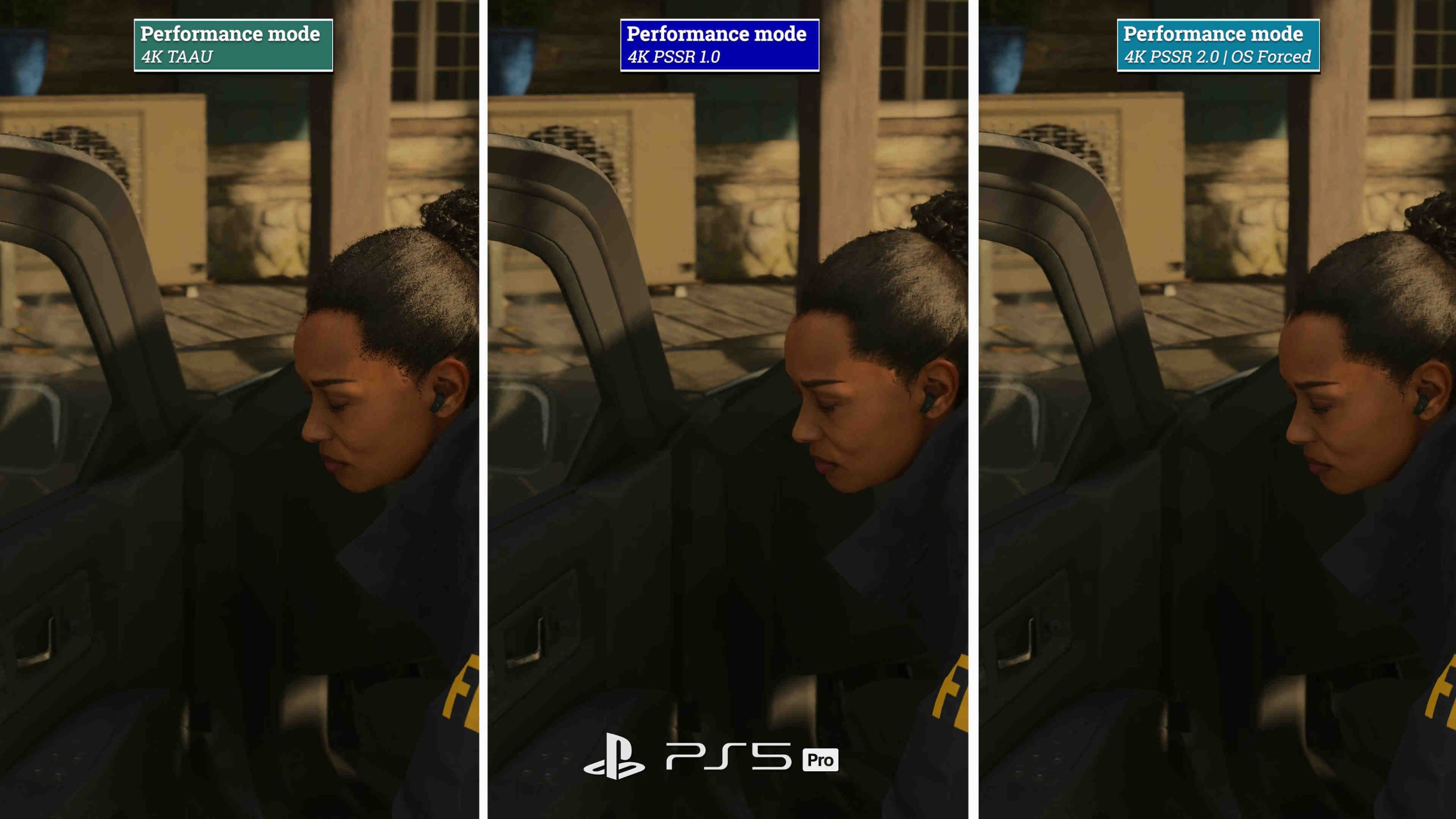
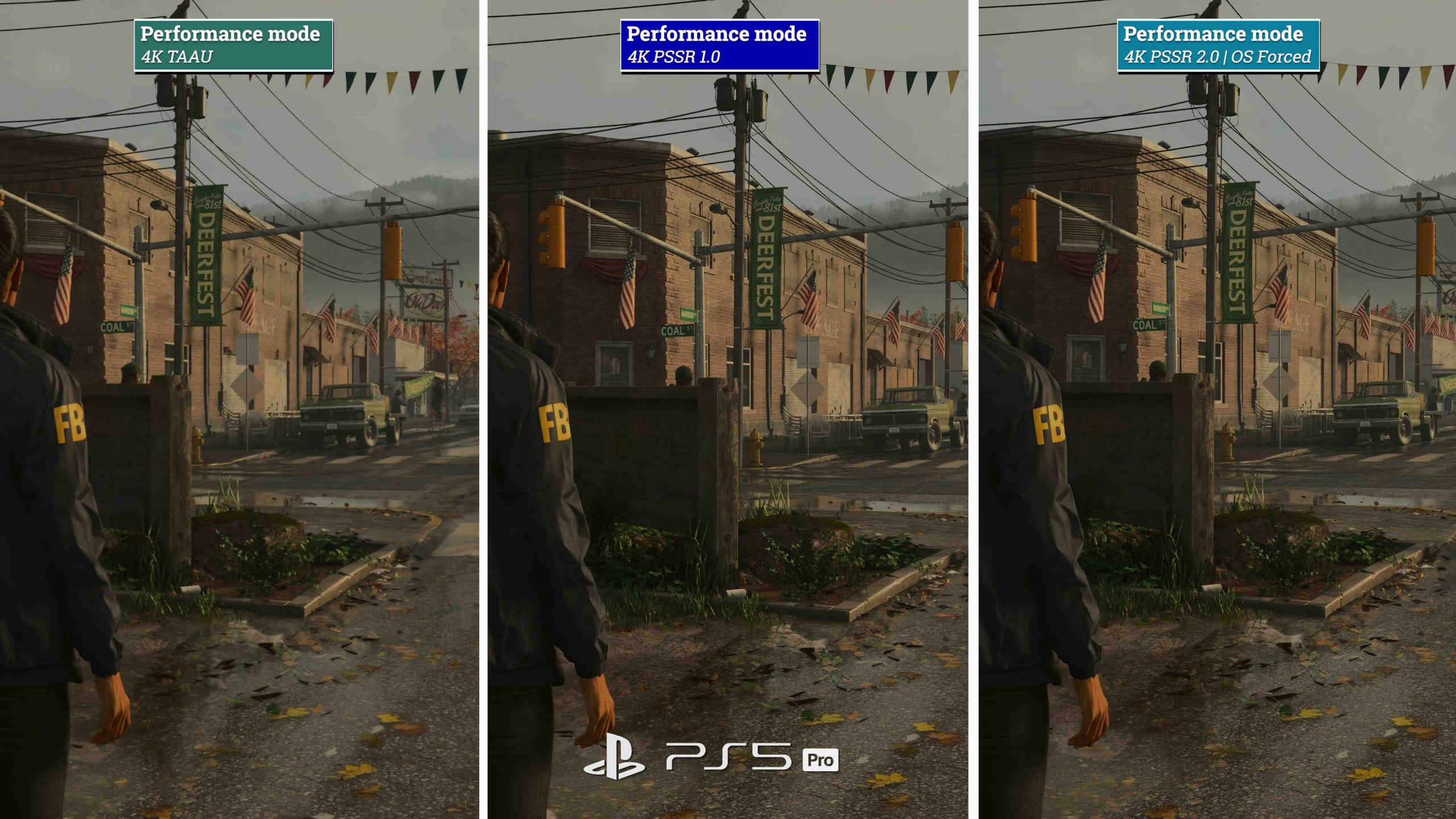
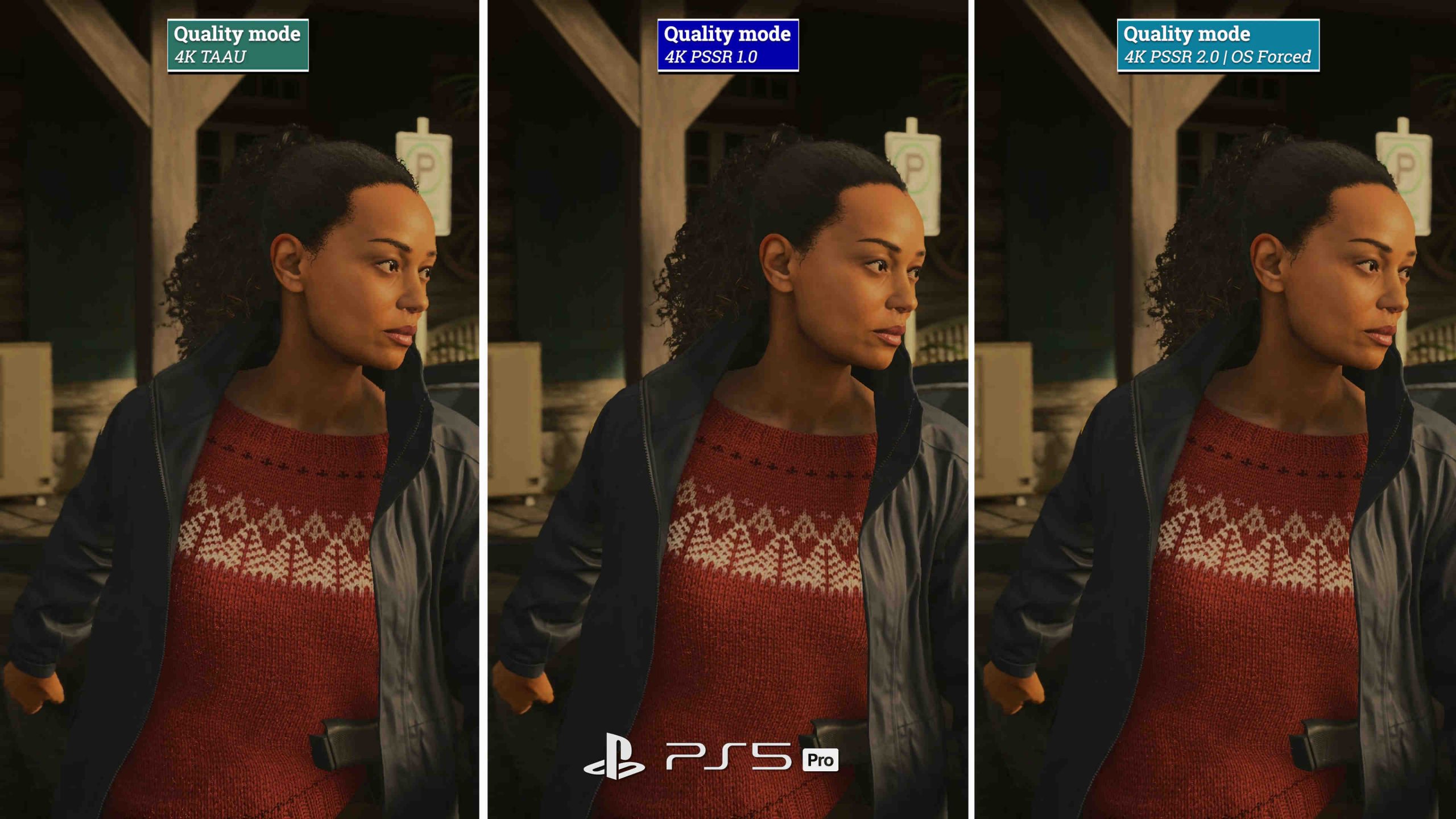
Alan Wake 2 for example made huge strides over the Remedy’s own engine TAAU, with PSSR 1.0 delivering a far more stable, coherent and cleaner image under motion. Improveing subpixel jitter, ghosting and texture clarity, PSSR 2.0 makes no increase to these, (in these tests forced on using the firmware toggle) and the results are stark, in that the shift from TAAU to PSSR 1.0 is obvious, not so with PSSR 1.0 vs 2.0. Even upclose, we do not even notice minor decrease in pixel jitter, Depth of Field effects or improved stablity than before. Textures and reflections are no more coherent under motion and both in pixel peeping and normal play, these updates are invisible or practically so at best.
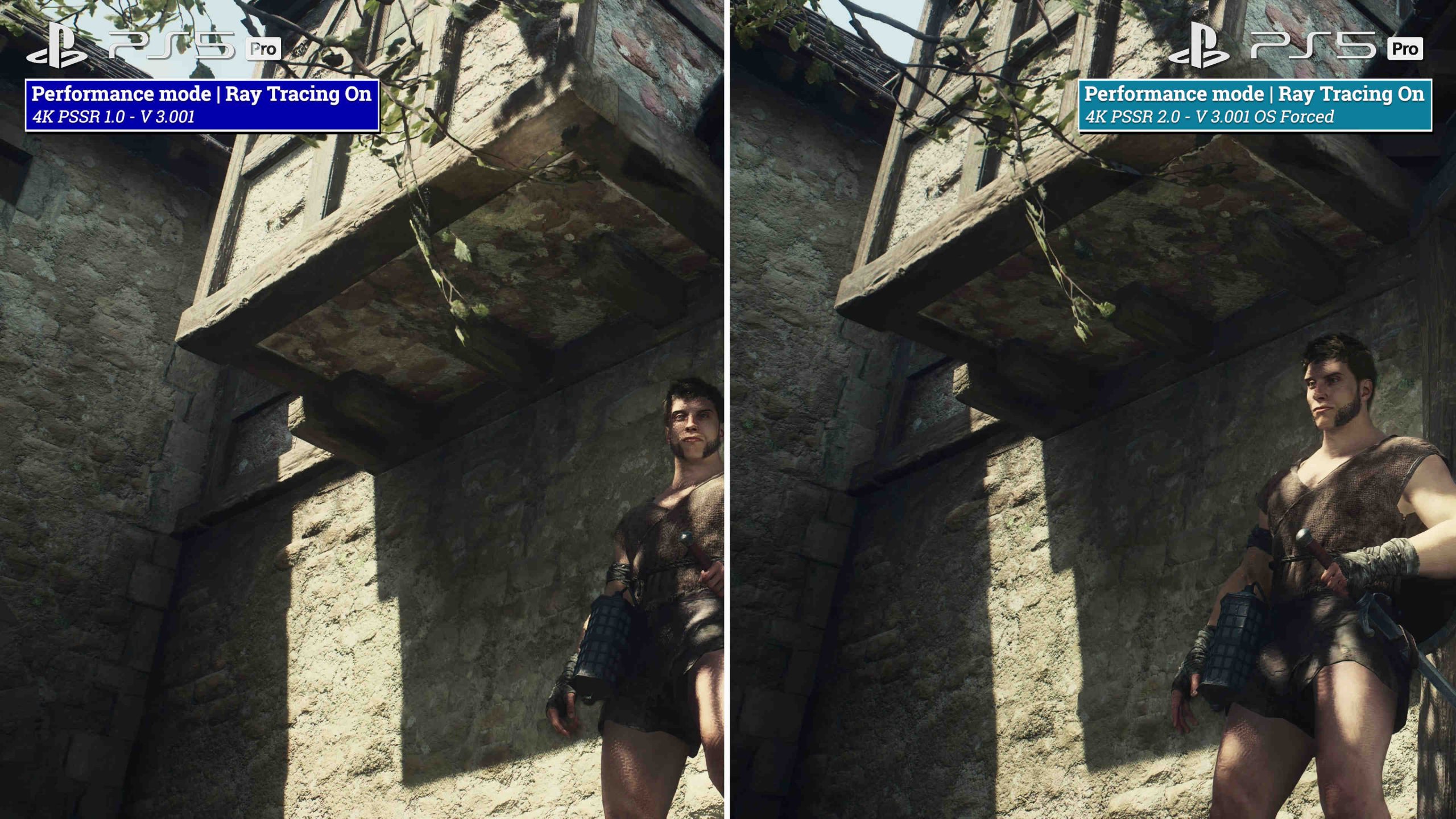
It is a similar story with Dragon’s Dogma 2 (which is as of the time of this article also yet to receive the patch). And using the same toggle to force 2.0 active we see a practically identical image over V1.0, so much so that I do not believe the game(s) are using the latest version at all OR the engine itself is not taking any advantage of the newer models due to their engine rendering code, API and OS calls or such. We see the same Ray Traced low sample flicker, edge disocclusion blocky noise and general image issues I noted in my review. Again, far superior to the PS5’s and Xbox Series X|S use of the RE Engine own Checkerboard solution and or FSR2 on PC, but we may have to wait for the official patch to see if any of these issues can be resolved to the same level we saw in Resident Evil: Requiem which launched with PSSR2.0 from the off.
We have seen a great many titles run, look and offer significant enhancements over the base PS5 console. Such as last year with the huge update to Black Myth: Wukong, which offered great strides in resolution, image quality and performance on PS5 Pro with it, at times, making the base PS5 version look like a High end PC versus low end console comparion. And this game took a year or so to reach the level it did using PSSR1.0, so with only 24 hours passed since it released, we have a great many weeks, months and games ahead to see if version 2.0 can make even bigger strides.
Be sure to check back on my Channel and Website over the coming days and weeks for more coverage on PSSR2.0, game technology and the latest DLSS 5.0 reveal.