
Nvidia DLSS 4.5 Transforms the game
Share the Story:
Super Resolution gets better & Faster
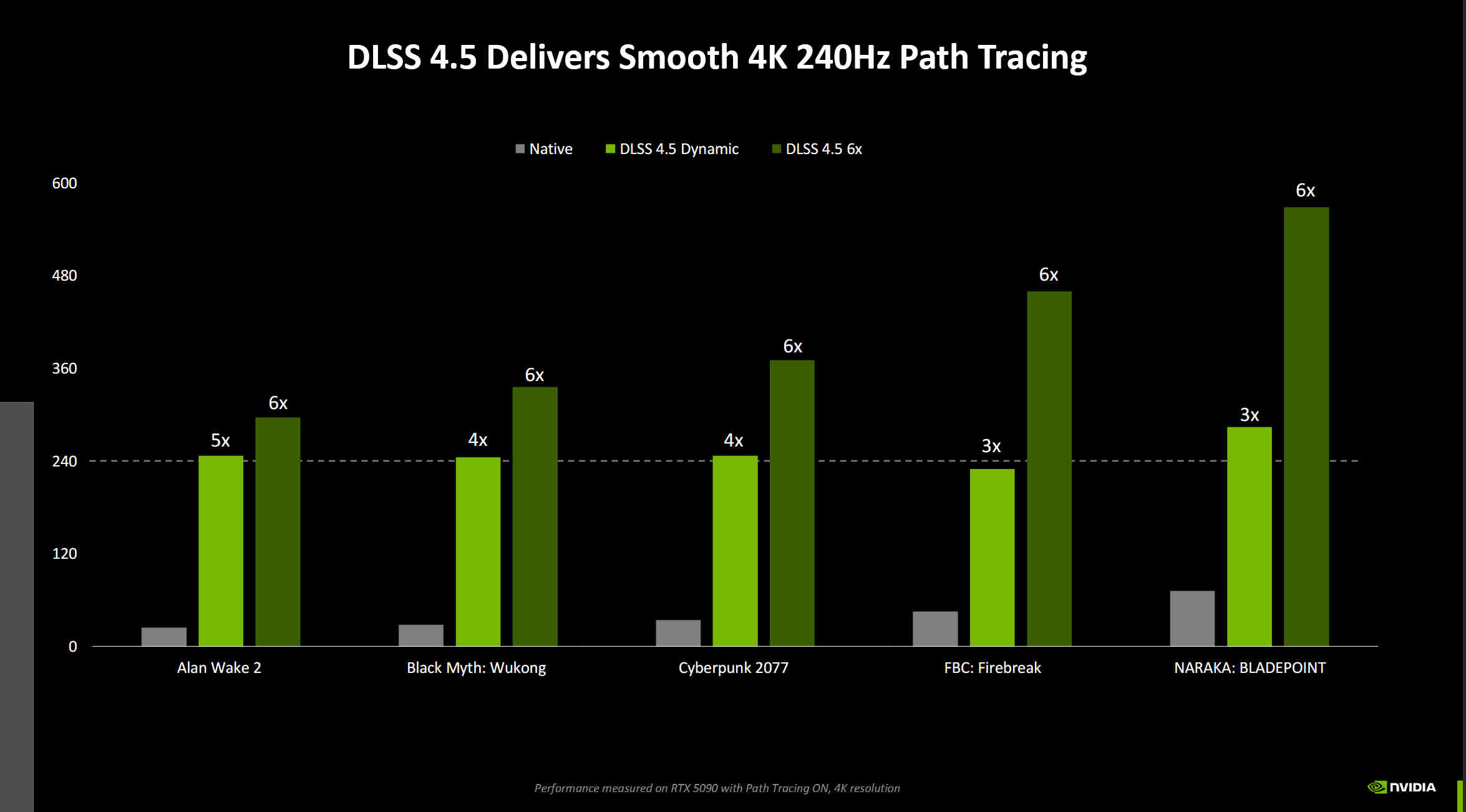
Announced during Nvidia CES 2026 and Geforce On presentations, was DLSS 4.5, the updated 2nd generation DLSS Super Resolutuon Tranformer model, alongside a 6x Multi-Frame generation enhancement. This pushes the previous industry best reconstruction technology up another notch over the competition and itself. The team visualised demonstrations of those enhancements across a selection of existing and, certainly, forthcoming games. You can view some them on the images below and also the Geforce On Update stream. The updates here fall into two distinct areas that will most certainly have a mixed reaction from the gaming audience.
DLSS 4.5 2nd Generation Transformer model
Why was 8 afraid of 4?
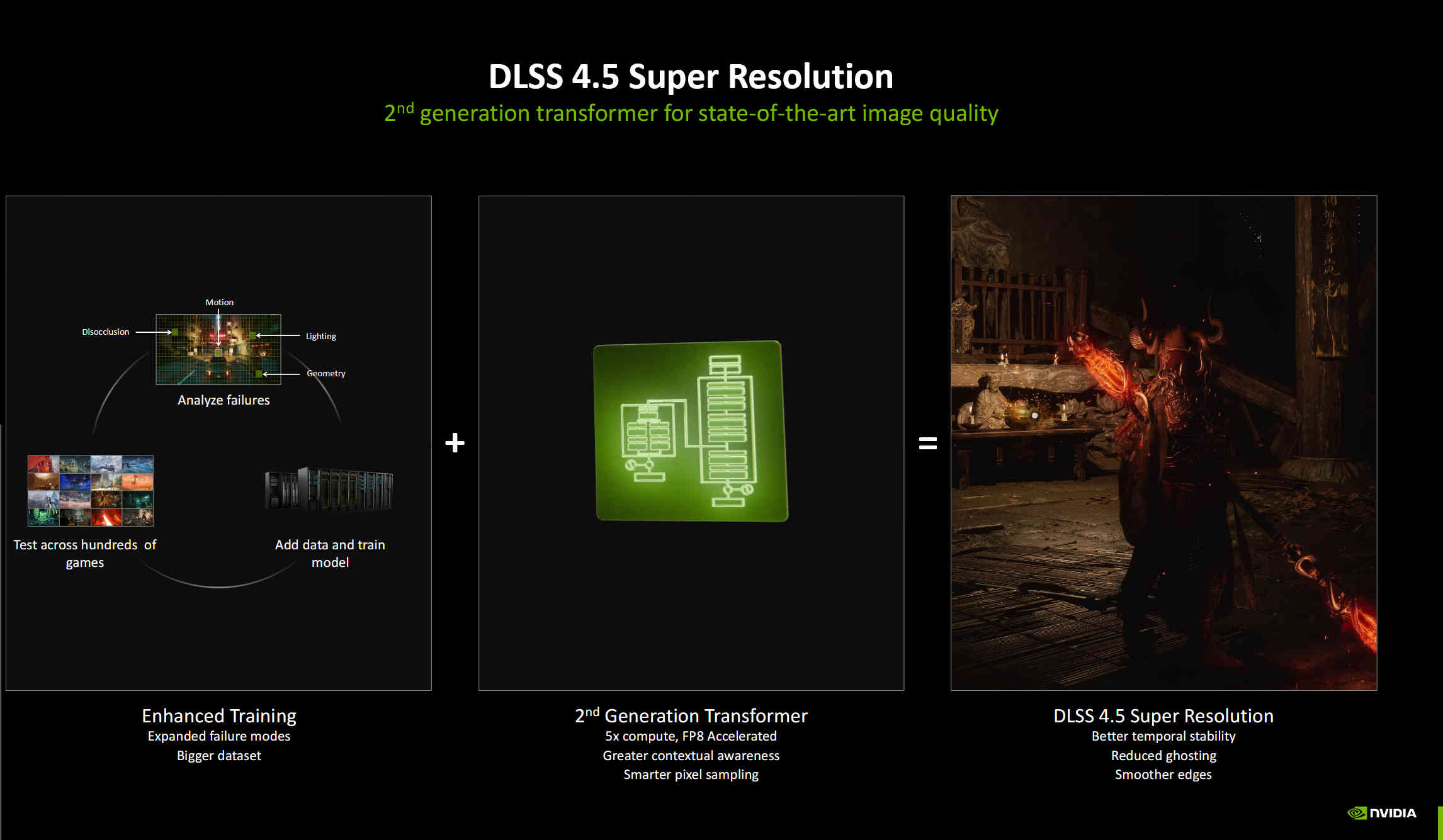
Building on the same technology, which still supports all RTX cards right back to the launch 20 series cards. The Tranformer model made huge strides in image stablity, ghosting of pixels between frames and Ray Tracing effects such as Shadows & Reflections, where the image quality, clarity and stability were drastically improved. Although it does run through the Turing, Ampere, and Ada Lovelace architectures, the performance cost and footprint of DLSS 4 is bigger than the latest Blackwell 50 Series architecture. This is due to the inherent NVFP4 over NVFP8 Tensor instructions which enable a wide range of high performant and smaller size LLMs to run much faster. The Ada cards can run NVFP8 in the compatibility mode, but this is still 2-3x faster on Blackwell native instructions. Turing and Ampere rely on FP16 which is significantly slower, clock for clock.
DLSS 4.5 builds on this with its new models natively supporting FP4 where possible and FP8 where required. Both of these are hardware accelerated making it more performant on the newer Blackwell cards. Even more importantly it will require less Vram, which aids the RTX5060 cards with only 8GB Vram budgets. But the benefits come from improving the continued trouble areas of the prior solution.
- A new Data model to work, trained on a greater source range. Improved the error and edges cases, reducing the failure issues.
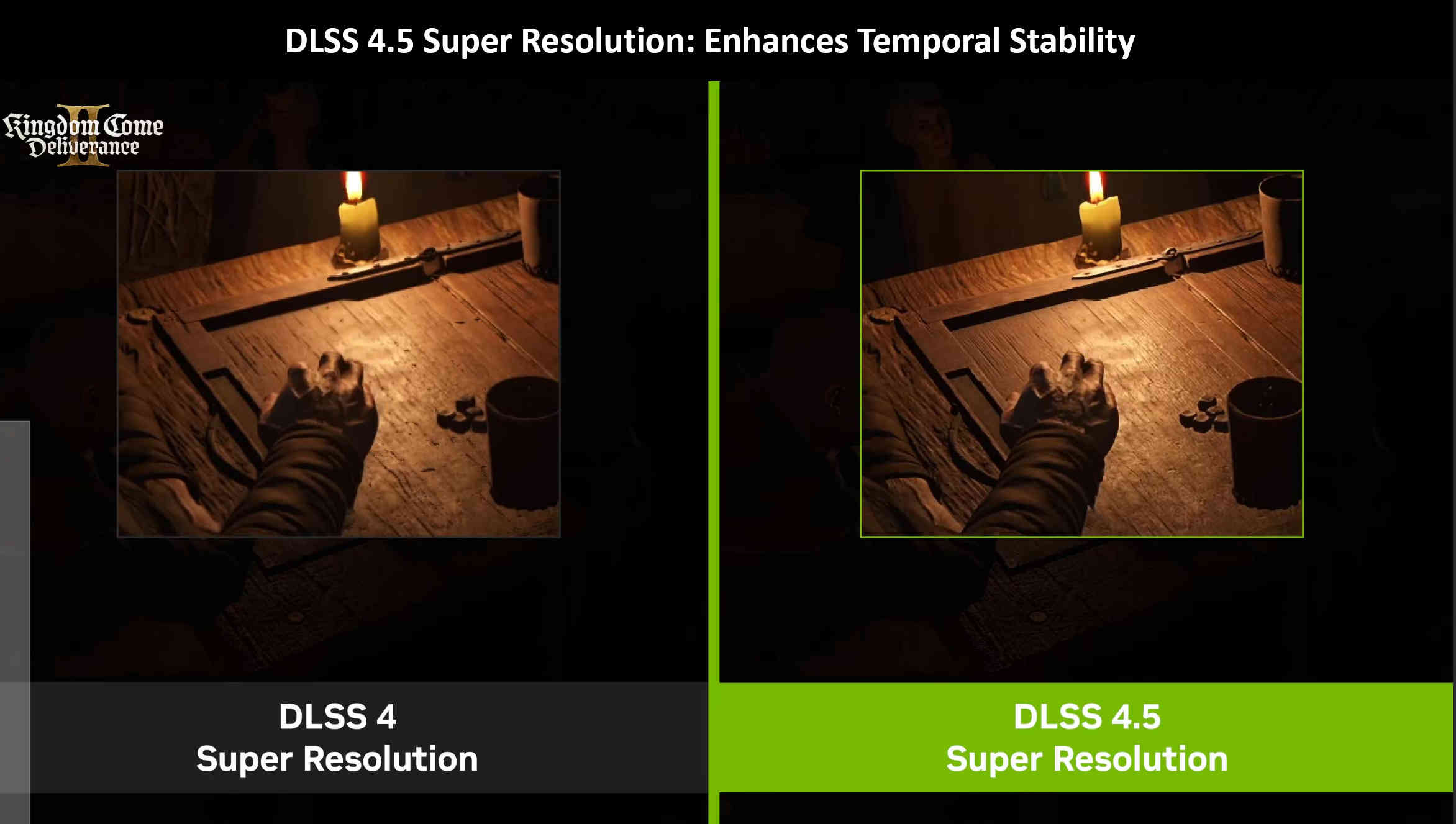
- Up to 5x more compute and improved pixel sampling means the image clarity and stability trade-off will be smaller than ever.
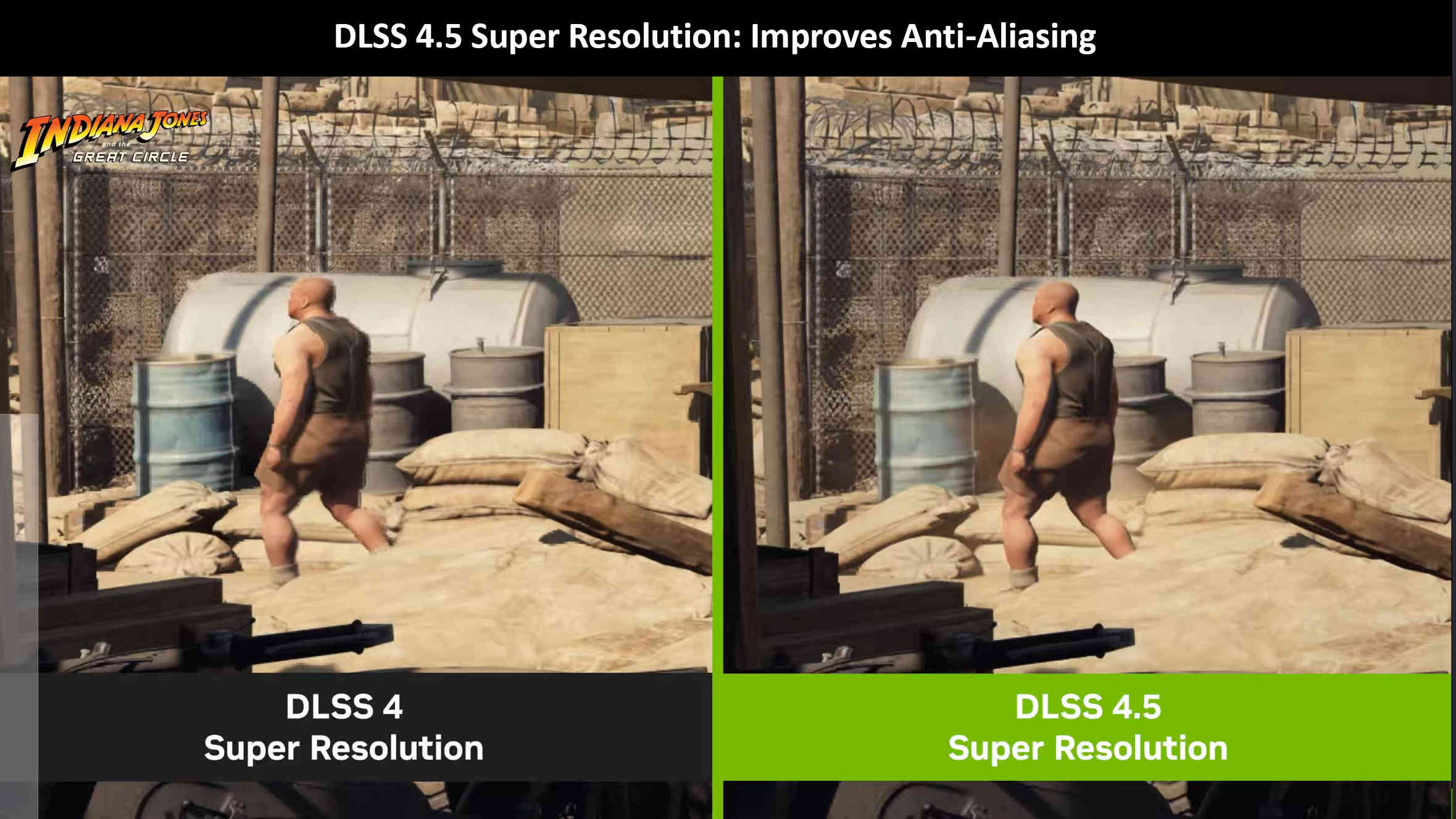
- Capped off by the Anti Aliasing now being much better and cleaning up low resolutuion edges, reducing stair-stepping, temporal flicker, sub pixel noise and ghosting.
All these updates improve the performance vs quality whilst retaining the crisp, details in high frequency textures and models and from the samples Nvidia provided us, it is certainly much better. Although once we get hands on we can, and will, cover this in far more depth with a selection of titles.
Not Fast enough yet
- GPU power reducutions when a demands are lower
- Enables refresh targets to align to your Screen’s maximum
- Improves frame pacing, animation judder and smoothness. A big issue for FSR4 for example
That last one is a key win for this new feature, although DLSS4 is far superior in maintaining the frame pacing cadence when using MFG over the competition. It can still present micro stutter, runt frames in most games and this should help resolve that so Game logic, Camera Logic and frame delivery are aligned reducing the impact of these inconsistent frames to screen.
This feature is a Spring 2026 update coming to the Nvidia App and latest drivers, but demos will be shown at CES26 and hopefully we will get early access to review and cover this in a future article and video. Building on the review I did for IGN last year on Battlefield 6 using MFG4x.
Be sure to keep peeled to our website and channel over the coming weeks for more details, Videos, technical information and articles covering what is coming from Nvidia and CES 2026.



Pingback: How to use DLSS 4.5 Right now? - Binary Dinosaur
Pingback: DLSS4.5 Ray Reconstruction will brighten our Summer - Binary Dinosaur