CyberPunk 2077 PS5 Pro Ray Tracing & PSSR2 Upgrade – NXG Technical Review
Share the Story:
The CyberRazor Cut
The patch comes in around 7.5GB and takes the old PS5 Backwards Compatibility modes, of which there were two, and adds a third new one, whilst updating the other two. The Headline grabber is the significantly enhanced Ray Tracing features that finally bring console closer to high end PC, but no Path Tracing Here. However, what we have is great and possible due to the teams work on their sadly, deprecated engine but also the Ray Tracing cores and BVH8 SIMD units that reside inside the RDNA4/Hybrid powered PS5 Pro’s GPU, enabling much faster Ray Triangle intersection and Bounding Box hierarchical traversal. As the PS5 Pro can sample and traverse 8 volumes in parallel rather than the old 4. What this means is the PS5 Pro can deliver Ray Tracing calculations much faster than the PS5 and can do much more in the same frametime due to its circa 67% faster GPU and over 2x faster Ray Tracing hardware. And this plays out in more ways than just the Ray Tracing quality
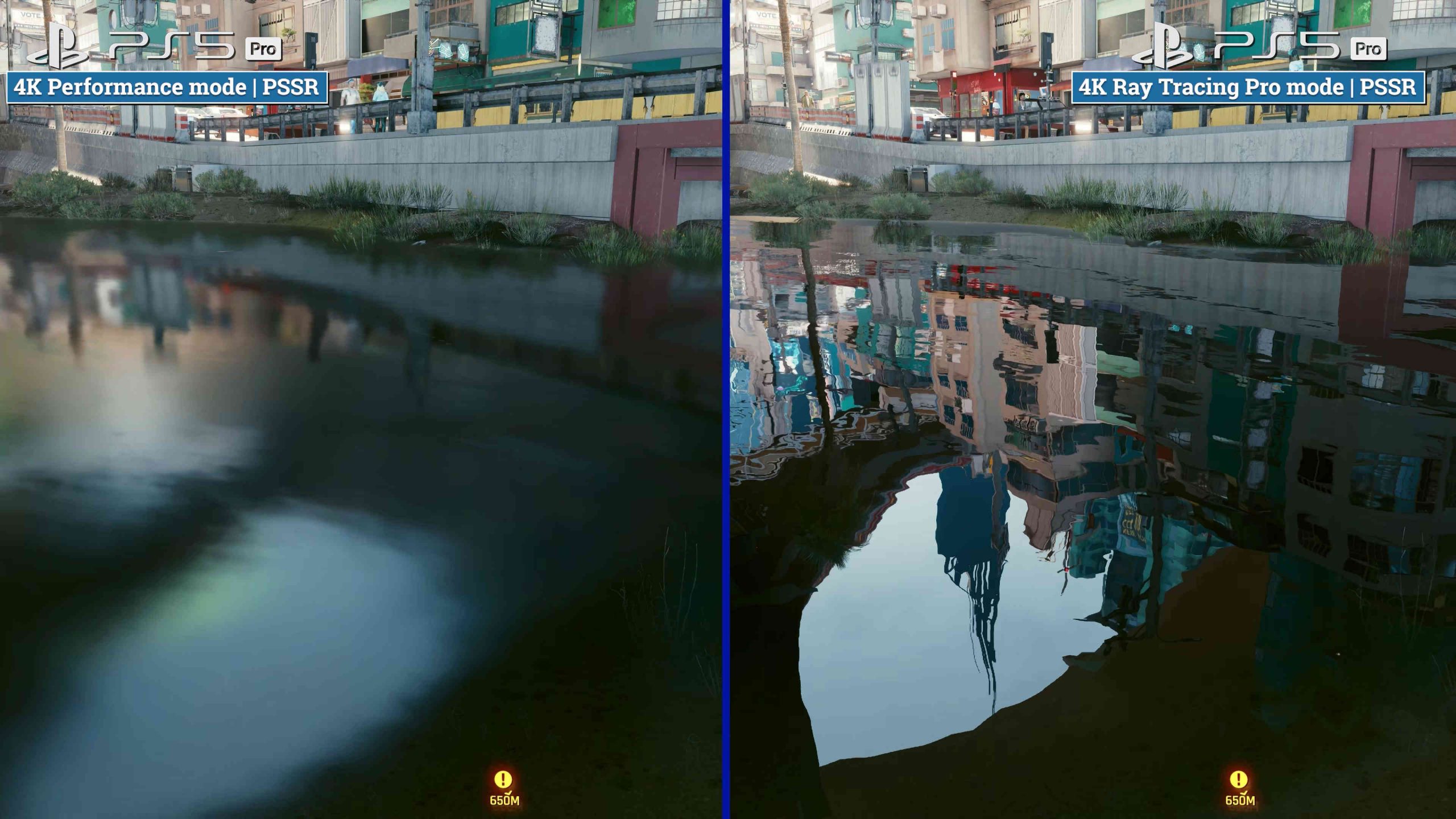
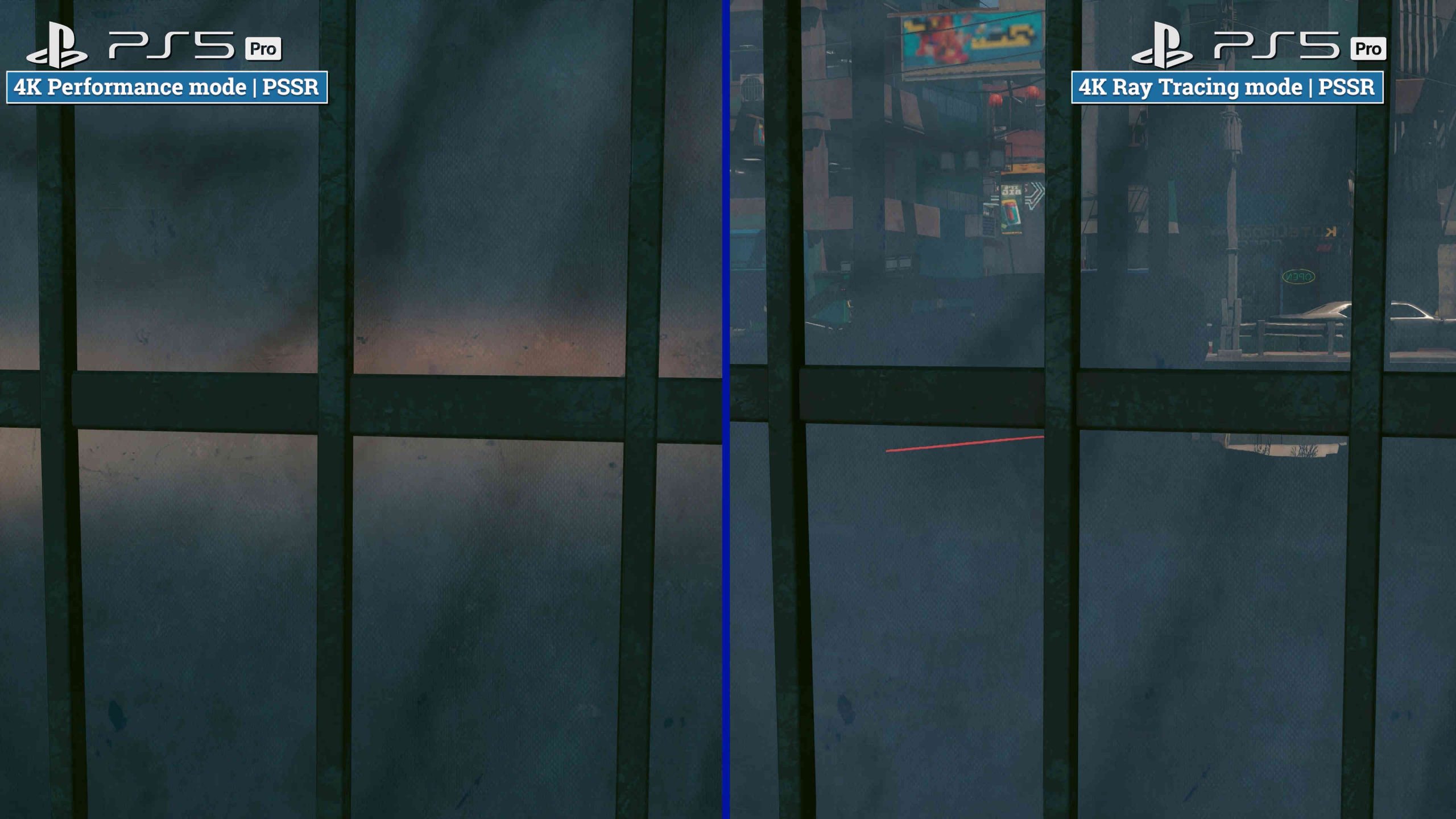
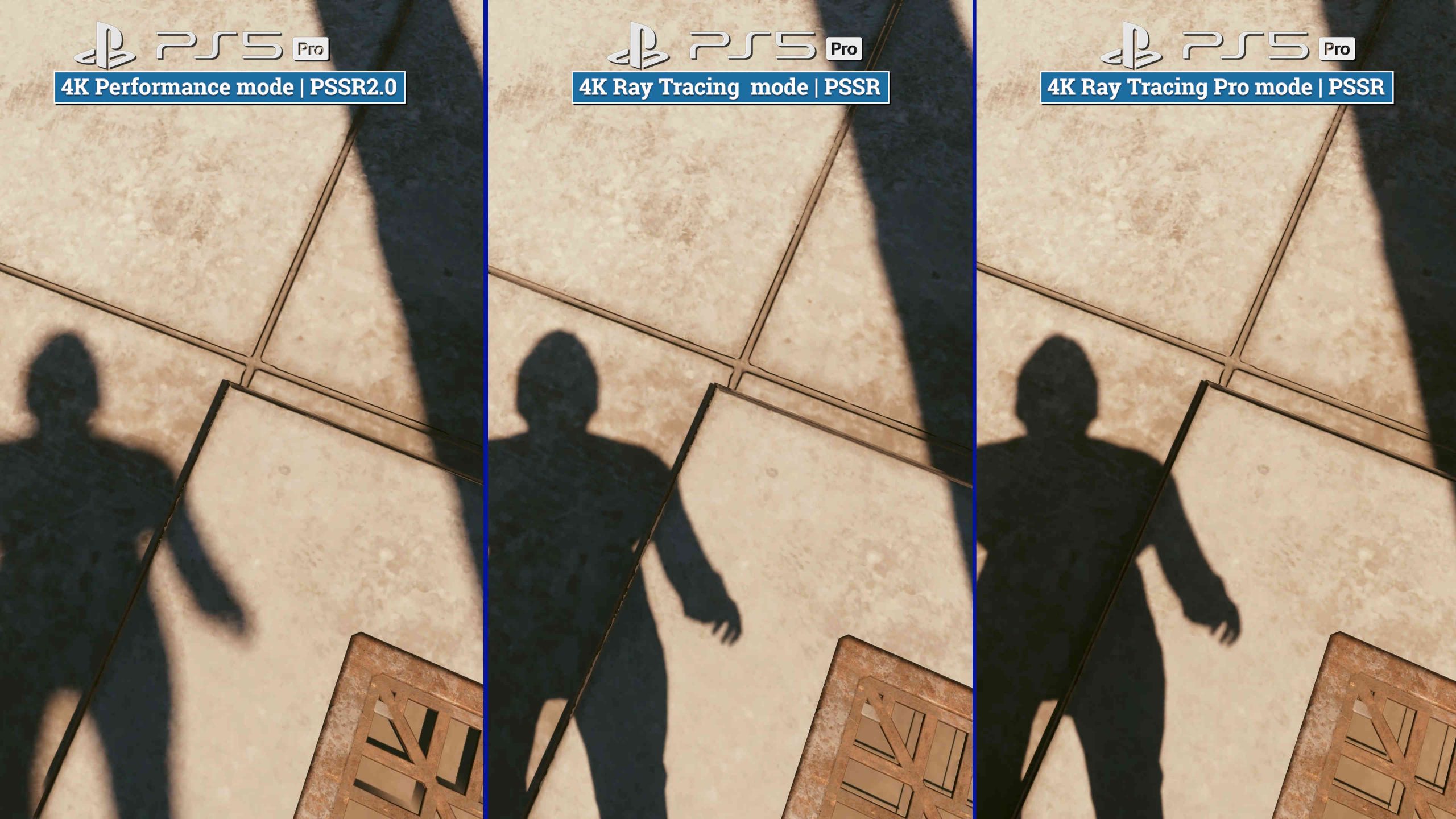
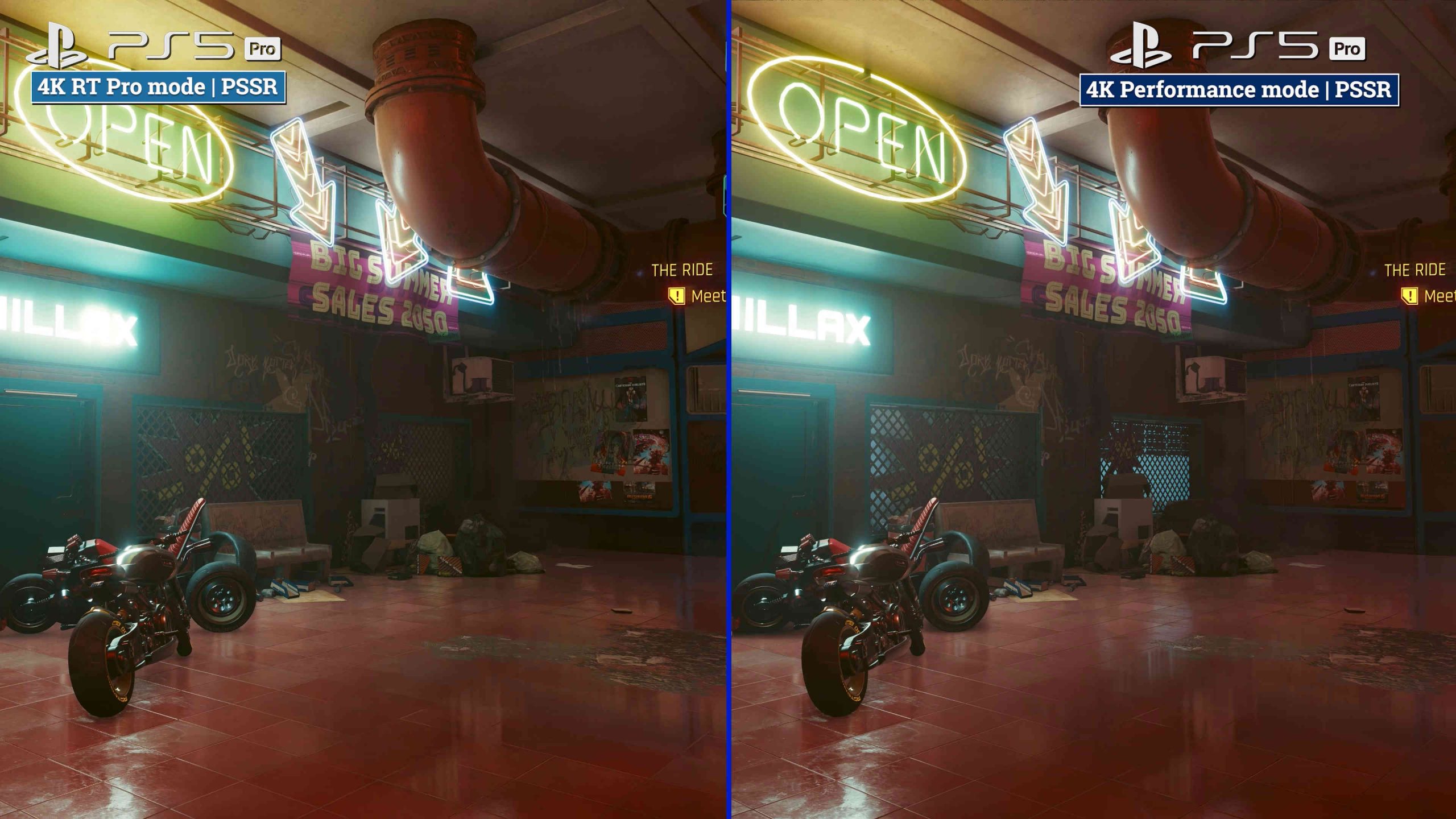
RT Pro mode Is the best visual hike, offering a suite of Ray Tracing effects from Ray-Traced Reflections on vehicles and transparent objects, including static objects such as buildings, signs but also dynamic ones like cars, fans and NPCs. This mode also extends all shadows to Ray Traced rather than the selected local shadows only, which was all the base PS5 offered in its Ray Tracing mode. RT skylight (Sun based Global Illumination) and Ray-Traced emissive lighting which is key for the amount of Neon signs in the game. This enables signs to no emit lights across local scenery, gemetry and even characters (well aside yourself, like reflections). All completed with a far more accurate Ray-Traced ambient occlusion pass. This mode packs a full suite of PC RT feature set that was exclusive to PC until now. Even better is the PS5 Pro runs it all at 40 FPS on displays with high 120Hz refresh rates (HFR). On a standard 60Hz display, it targets 30 FPS instead but looks the same.
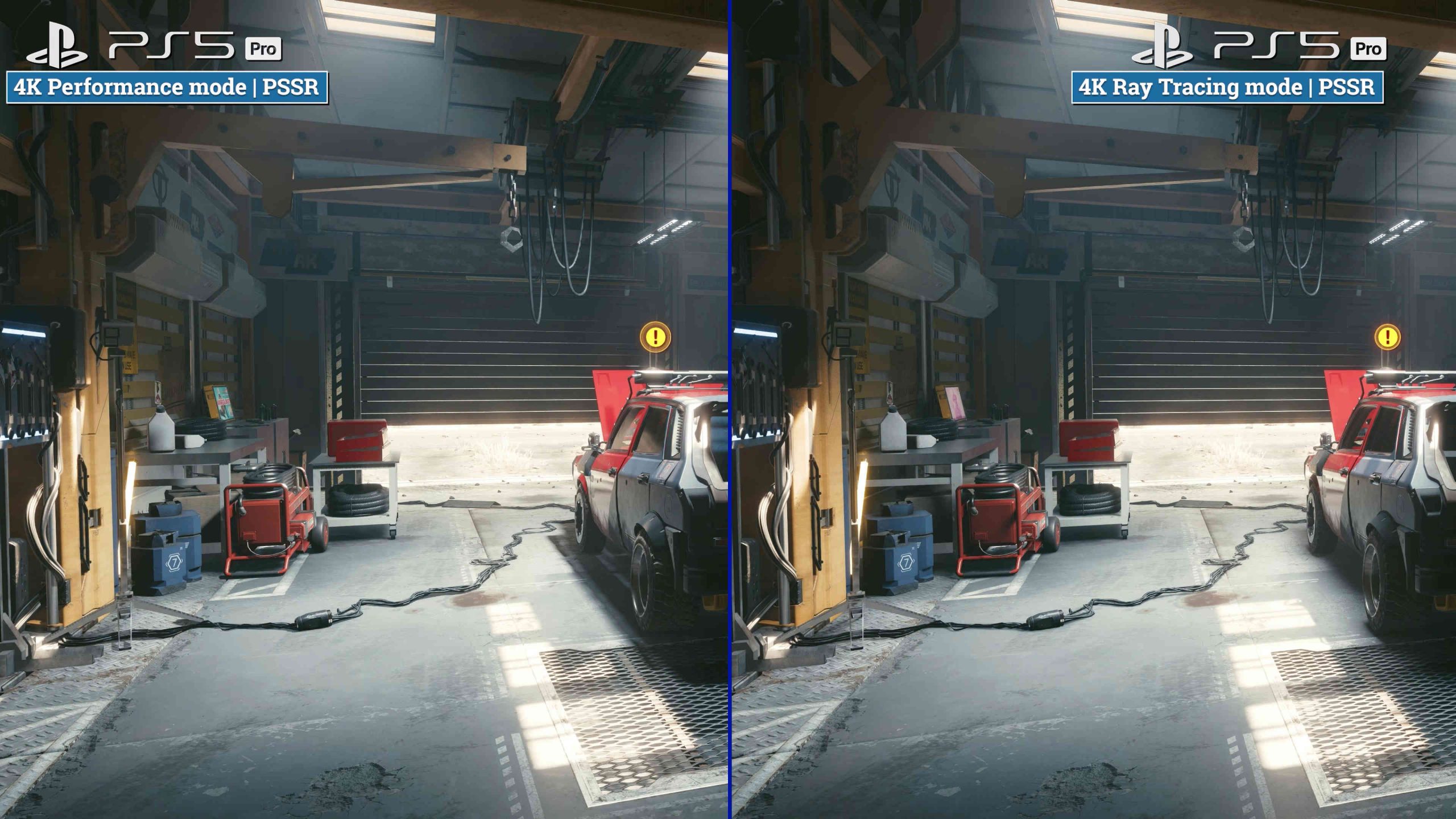
Ray Tracing Mode balances the features with performance hikes, again highest with a 120hz VRR Screen. The RT emissive lights and sun gi is now removed, resorting to the older faster based point, spot and sun light. The Ao is also reduced to an analytical Ao now, although still good, can over darken areas, creating blobby shade and incorrect occlusion often due to its screen space limits. However, RT sun and local shadows remain as pro mode as does the reflections across cars, glass, signs, water bodies which has the same excellent BVH quality, geometry, sharp accuracy and stability as the other mode, again helped by the excellent PSSR2 which really cleans up the noise in them and other high frequency sections in the title over the old FSR2 solution. It targets 60fps and can hit the mid 70s again on HFR and VRR screens which is smoother and more responsive than the RT pro mode.
Performance Mode culls all RT but does provide sharper shadows and higher LoD than before on base PS5 but its biggest boost is the fastest, smoothest gameplay, targeting 60 FPS on regular display, and up to 90+FPS on those same HFR, VRR-enabled displays.
Eyeball Augment
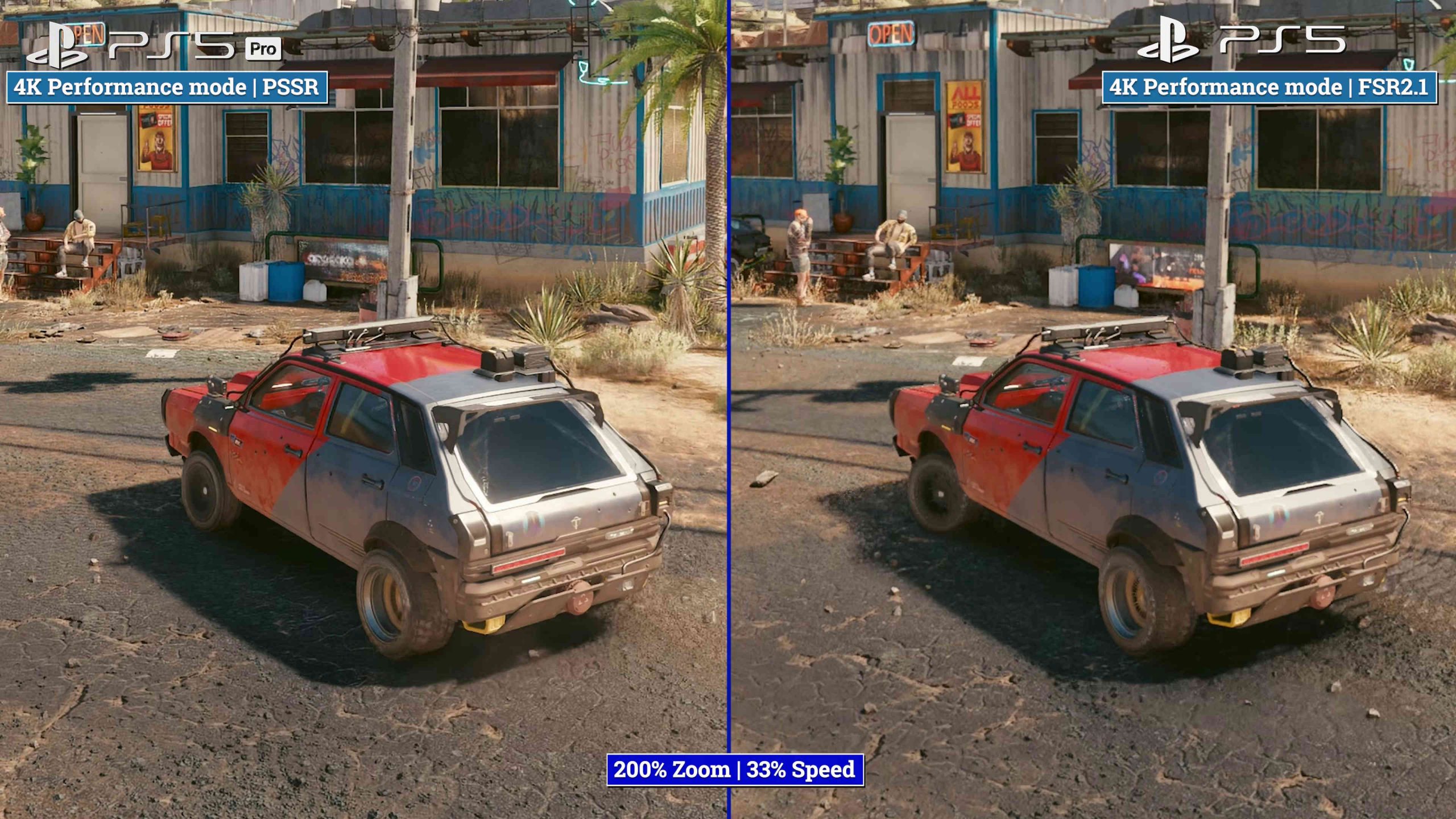
And here lies the biggest boost, pssr2, as the update allows you to switch between FSR2.1 and the latest PSSR2.0 upscaler and like DLSS before it, the difference is transformative at times. Take this day light section, thin, distant objects, stochastic and dithered shading effects in AO, GI or shadows are incredibly unstable with FSR2, not so with PSSR.
Even though the resolution is 4k in all modes upscaled from a lower base, PSSR2 is often the lower base with the better image quality, clarity and stability. PSSR2.0 may be dynamic but often seems to be approx. 2176x1224p as a base and this is very quickly reconstructed back to 4K, the RT Pro mode is the one that seems to scale lowest. But if it is dynamic it probably mirrors the FSR2 mode, where it can scale from approx. 2560x1440p base down to 2304×1296 and this is aimed at maintaining the best image and performance which is the final piece of this in-depth analysis.
Ratchet up the Speed
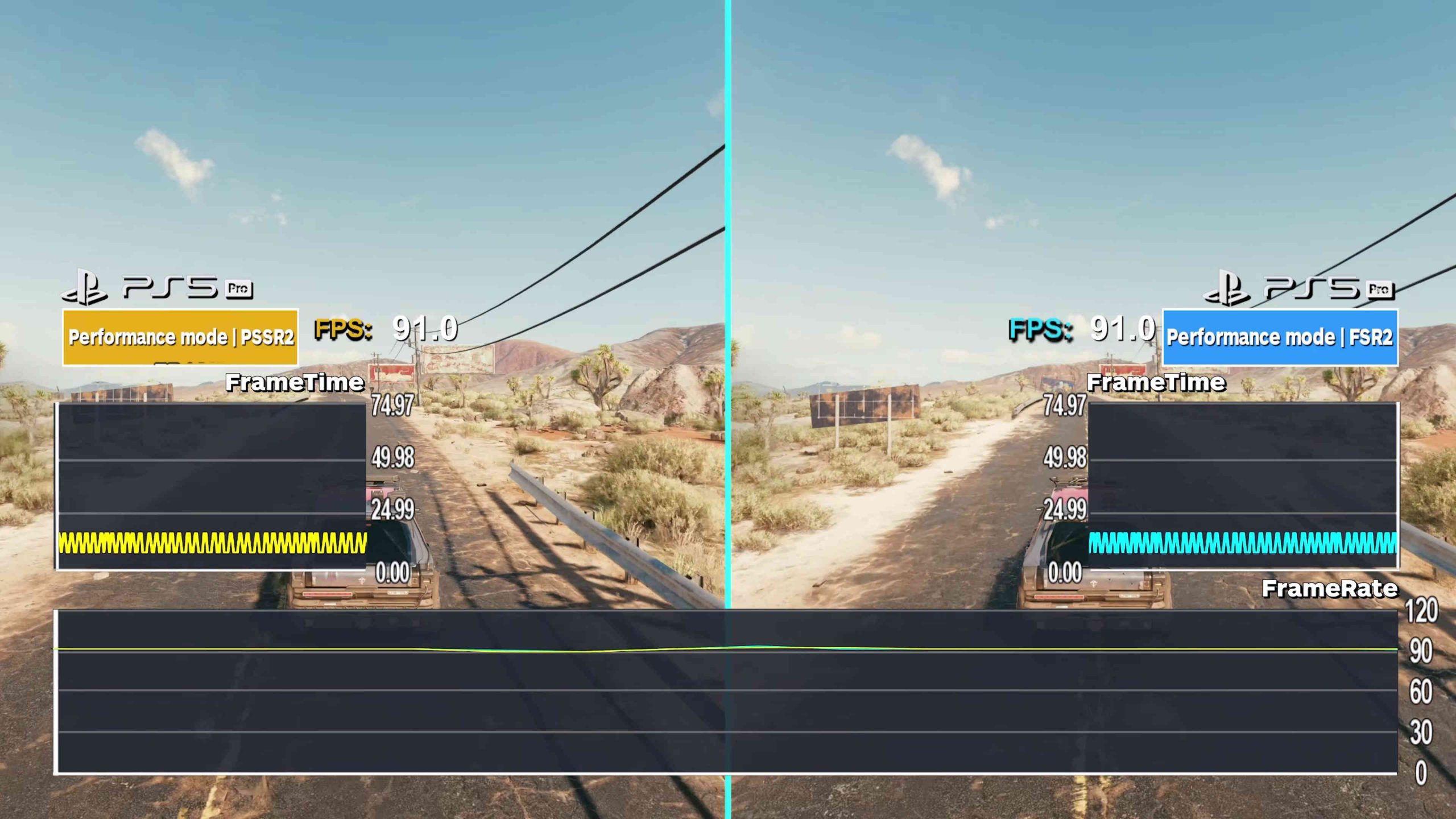
The 3 modes covered all stagger the feature set well evident in the performance metrics. Testing FSR2.1 vs PSSR 2.0 is interesting, as from scene to scene, load to load, they will differ in their cost. Using the Outback ride we see the performance mode hits a 92fps high with PSSR2.0 and 93fps with FSR2, so margin of error 0.1% effectively identical. The average runs here see 91.09fps v 91.06fps, showing the team, and Sony, have balanced PSSR2 to offer the same performance targets with lowerbase input requirements but vastly superior image quality, thus making FSR2 fully redundant, in this game and test case at least.
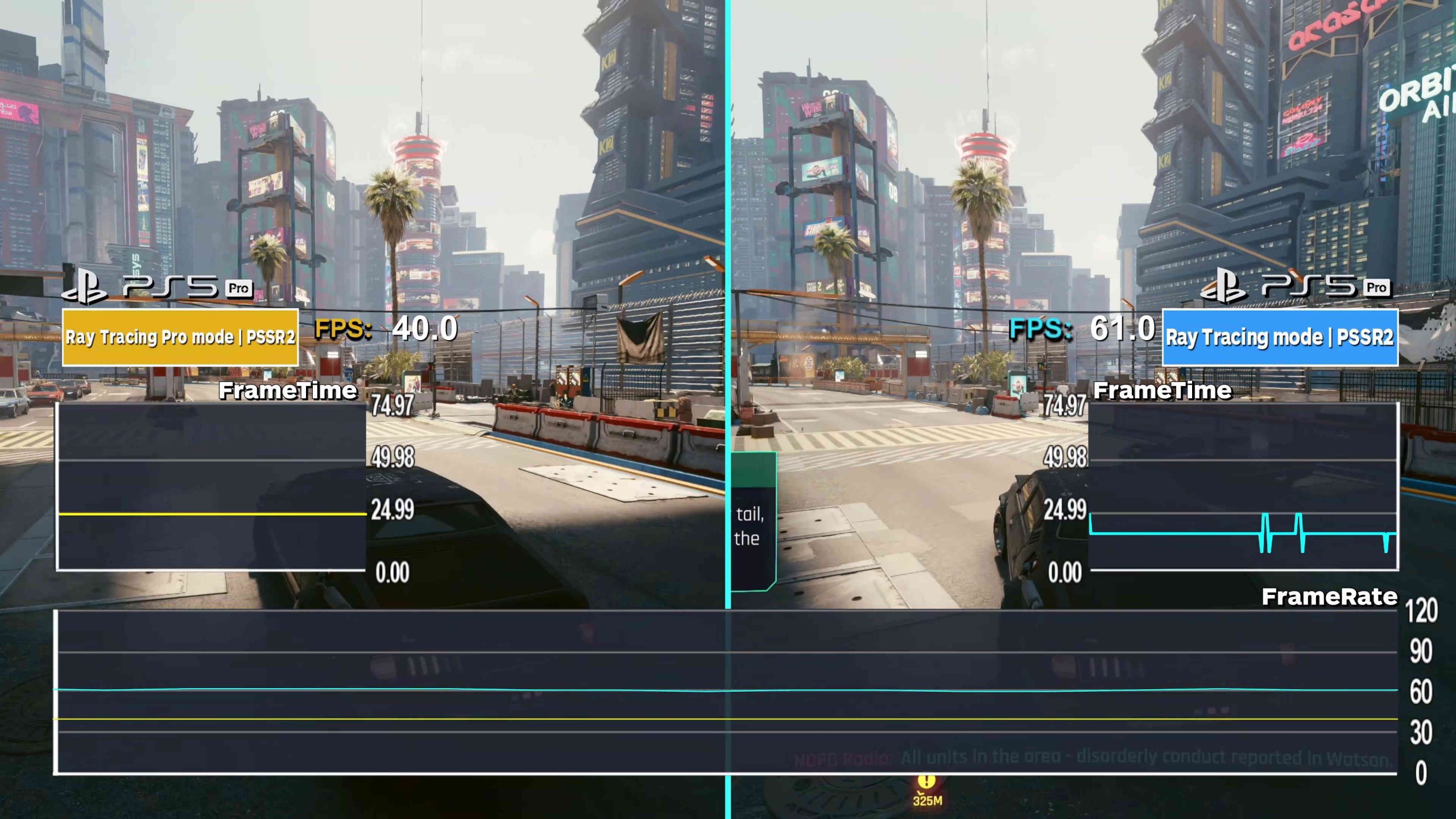
The Ray Tracing Pro and Ray Tracing mode next, using PSSR on both, we see a ceiling on the Ray Tracing Pro mode of 25ms frametime or 40fps giving us 3rd of the 120Hz output maximum. The Ray Tracing mode moves to half refresh with VRR allowing us to lerp between 8, 16 and 25ms frametimes offering a high of 73fps in the outback run vs a capped 40fps in this section bar a few dropped or skipped frames, here is the best case scenario and the RT mode is 80% faster than the RT Pro mode, but if that were also uncapped I expect that gap would be smaller. And indeed it is once we move into my long standing tin can alley run and highway drive shows that the RT GI and AO have an approx 50% cost in data throughput and thus frametimes. In this identical run we are skipping and dropping frames to maintain that 60fps mean and data throughput and buffers are the likely limit here with us having a 56fps low and 63fps high now. Many would say CPU bound but even without testing perf here, it seems evident from the data and my educated assumptions, we are data and memory bound here, although I am sure CPU does become a bottleneck at points as RT buts more work on CPU for the BVH and other areas, leaving that 73fps high a rare luxury once in night city. However that RT Pro 40fps mode looks even better now as it remains as consistent as before as the 25ms frametime works perfectly with the memory, bandwidth and calc times to be a great choice here, for games consistency is always better than higher highs but more peaks and troughs, and VRR is not a nirvana to that no matter what some say. Ultimately this test is more indicative I real world results and the RT mode is now a healthy 69% faster, which would likely be closer to 50% if both were uncapped.
Performance mode wraps us up and the 90+ fps target is actually achieved well here, but more can be see on this and all modes in the video on my channel and this page.
Final Thoughts
Like the Witcher 3 before it, Cyberpunk 2077 has the legs to last, this patch may be very late in the day and likely partially supported by Sony and the game being available on PlayStation Plus. It presents 3 excellent ways to play on PS5 Pro, with the highest end Ray Tracing feature set yet on consoles by far. That said, and as I covered in my Path Tracing review at release on IGN, the games art team did such a good job that the RT features are not as big an increase as on some other titles and the path traced PC version, although far more drastic in changes, even that at times can be varied in the impact. As such the PSSR image quality increases, RT reflections and higher fps and faster response times are the best parts of the updates. In the past month with PSSR2 we have now seen some compelling reasons to own the enhanced console, long may this release schedule continue